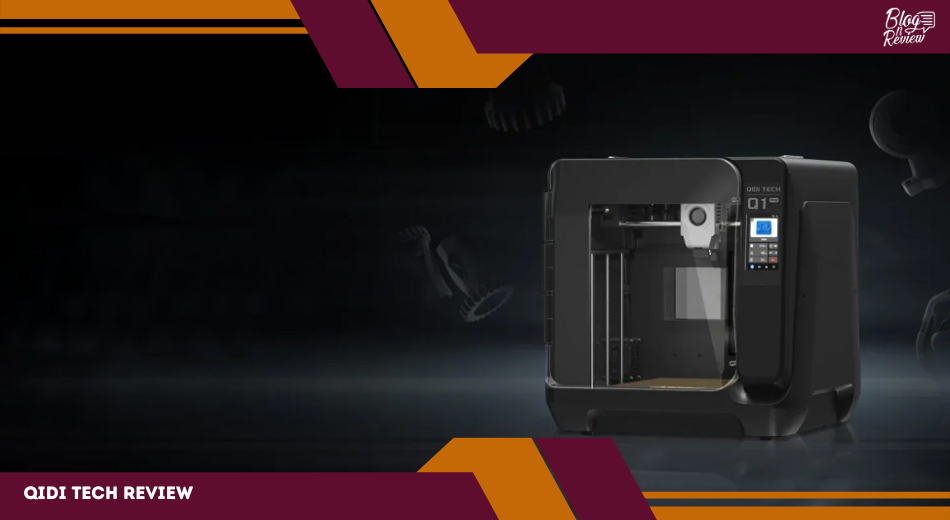
QIDI Tech Review: Is QIDI’s CoreXY 3D Printer Worth Buying in 2026?
-
September 21 , 2026
-
38
Quick Verdict Box
| Category | Rating |
| Overall Rating | ⭐ 8.8/10 |
| Print Quality | 9/10 |
| Engineering Material Capability | 9/10 |
| Ease of Use | 8.5/10 |
| Value for Money | 8.5/10 |
| Beginner Friendliness | 8/10 |
Introduction: Why Everyone Is Searching for a QIDI Tech Review
The 3D printer market has changed dramatically over the last few years. What was once a hobby reserved for technically minded makers has become a practical tool for engineers, designers, small businesses, educators, and everyday creators. Modern printers are faster, smarter, and far easier to use than the machines of the past. However, choosing the right printer has become more complicated. A quick search reveals dozens of options from brands such as Bambu Lab, Creality, Prusa, Anycubic, and QIDI Tech. Many buyers are asking similar questions:
Is QIDI worth it?
How does QIDI compare with Bambu Lab?
Is a QIDI printer better than Creality for engineering materials?
Which CoreXY printer offers the best balance between speed, reliability, and price?
These are reasonable questions because buying a 3D printer is no longer just about maximum speed. A machine that prints PLA quickly but struggles with ABS, nylon, or carbon-fiber materials may not be useful for professional applications. That is where QIDI Tech stands out. Unlike some brands focused primarily on beginner-friendly consumer printing, QIDI has developed printers aimed at users who want stronger materials, enclosed environments, and more professional capabilities without paying industrial machine prices.
In this QIDI Tech Review, we’ll examine the company’s approach, explore popular models like the QIDI Plus4 and QIDI Q1 Pro, analyze real-world performance, compare QIDI vs Bambu Lab and QIDI vs Creality, and determine whether these printers deserve a place among the best 3D printer options for engineering materials.
What Is QIDI Tech?
QIDI Tech is a 3D printer manufacturer focused on producing desktop machines for hobbyists, professionals, and industrial users who need reliable printing performance. The company has become known for building enclosed FDM (Fused Deposition Modeling) printers designed to handle materials that are more demanding than standard PLA. Many entry-level 3D printers are optimized around easy materials. PLA is forgiving, affordable, and produces excellent results without requiring a controlled environment. The challenge begins when users move into materials such as:
- ABS
- ASA
- Nylon
- Carbon fiber reinforced filaments
- PET-CF
- Other engineering-grade materials
These materials often require higher temperatures, stable chamber conditions, and stronger mechanical systems. QIDI Tech’s product strategy focuses heavily on solving those challenges.
Company Background
QIDI Tech entered the 3D printing market with the goal of creating accessible machines that could bridge the gap between consumer printers and professional manufacturing equipment. Over time, the company developed a reputation among advanced hobbyists because of its enclosed printers, high-temperature hot ends, and compatibility with specialized filaments. Rather than competing only on low price, QIDI has focused on practical engineering features.
This approach has attracted users who build:
- Functional prototypes
- Mechanical parts
- Automotive components
- Robotics projects
- Manufacturing aids
- Custom tools
- Replacement parts
Main Purpose of QIDI Printers
The main purpose of a QIDI printer is simple: Provide professional-level material capability in a desktop-sized machine. A QIDI printer is not just designed to make decorative models. It is built for users who want functional parts that need strength, durability, and heat resistance. For example, an engineer printing a prototype bracket may need a material that survives higher temperatures or mechanical stress. A standard open-frame printer may struggle in that situation. A QIDI enclosed CoreXY machine is designed for these scenarios.
Target Audience
QIDI Tech printers are especially suitable for:
Engineers and Designers
Professionals who need functional prototypes benefit from the ability to test real parts before manufacturing.
Advanced Hobbyists
Makers who have outgrown basic beginner printers may appreciate the additional material options and improved performance.
Small Businesses
Companies producing custom parts, tools, or prototypes can use QIDI machines as affordable production equipment.
Education and Research
Schools and laboratories may find enclosed printers useful for teaching advanced manufacturing concepts.
Key Benefits of QIDI Tech Printers
Strong Focus on Engineering Materials
One of QIDI’s biggest advantages is material compatibility. Many affordable printers advertise impressive speeds but are primarily designed around PLA and PETG. QIDI models are more focused on materials that require controlled printing conditions. An enclosed build chamber helps maintain consistent temperatures around the printed object. This reduces problems such as warping, layer separation, and failed prints. For users working with ABS, ASA, nylon, or carbon-fiber composites, this difference can be significant.
CoreXY Architecture for Speed and Stability
Modern QIDI printers use CoreXY motion systems. Unlike traditional Cartesian printers where the print head moves heavily in multiple directions, CoreXY systems use coordinated belt movement to control motion.
The advantages include:
- Faster printing speeds
- Reduced moving mass
- Improved precision
- Better performance during rapid movements
This design has become popular among high-performance 3D printers because it balances speed with accuracy.
QIDI Plus4 Review: The Performance-Focused Option
The QIDI Plus4 represents the company’s push toward a more advanced desktop manufacturing experience. It targets users who want:
- Higher print speeds
- Better temperature control
- Larger projects
- Professional material support
The Plus4 is positioned as a machine for users who have moved beyond beginner printing and want a printer capable of handling demanding applications. Its enclosed design makes it particularly attractive for engineering materials because environmental stability becomes increasingly important as material requirements increase. For someone comparing the QIDI Plus4 vs entry-level printers, the biggest difference is not simply speed. It is the ability to reliably print stronger materials.
QIDI Q1 Pro Review: A More Accessible High-Performance Printer
The QIDI Q1 Pro takes many advanced features and packages them into a more approachable machine. It is aimed at users who want premium features without moving into the highest price category.
The Q1 Pro appeals to:
- Serious hobbyists
- Small businesses
- Designers
- Users upgrading from basic printers
Compared with older-generation printers, it offers a more modern experience with faster operation, improved automation, and better overall usability. For many buyers researching the best CoreXY 3D printer reviews, the Q1 Pro is likely to appear because it represents the current trend toward faster, smarter, enclosed desktop printers.
Check Today's Price
Real-World Performance: How Does QIDI Tech Actually Perform?
A 3D printer can look impressive on paper, but the real test is how consistently it performs after weeks and months of actual use. This is where QIDI Tech has built much of its reputation. The company’s printers are not positioned as simple entry-level machines. They are designed for users who care about repeatability, material flexibility, and functional prints. During real-world use, the biggest strengths of QIDI machines become clear: stable printing, strong material compatibility, and a design philosophy focused around practical applications. However, like any technology product, there are trade-offs.
Print Quality and Accuracy
Print quality is one of the most important factors when choosing a 3D printer, and QIDI performs strongly in this area. The combination of CoreXY mechanics, rigid frames, automatic calibration systems, and precise motion components allows QIDI printers to produce detailed models with clean surfaces and consistent layer lines. For everyday materials such as PLA and PETG, users can expect excellent results with minimal adjustment. The bigger advantage appears when printing more challenging materials.
Materials like ABS and nylon often expose weaknesses in cheaper printers. Problems such as corner lifting, inconsistent layers, and dimensional inaccuracies become common without proper temperature control. QIDI’s enclosed designs help reduce these issues by creating a more stable printing environment. For engineering users, this reliability can matter more than raw speed. A prototype that prints quickly but fails halfway through is not valuable. A slightly slower machine that consistently produces usable parts often delivers better overall productivity.
Speed Performance
Speed has become a major selling point in modern 3D printing. Brands such as Bambu Lab helped popularize high-speed desktop printing, forcing other manufacturers to improve their machines. QIDI has responded with CoreXY-based printers capable of impressive print speeds. In practical use, QIDI printers can complete large models significantly faster than older-generation Cartesian printers. However, maximum advertised speed numbers should always be viewed carefully.
Real-world speed depends on:
- Material type
- Print quality settings
- Model complexity
- Cooling requirements
- Layer height
A professional user printing functional parts may prefer reliability over extreme speed settings. QIDI’s approach focuses more on balanced performance rather than chasing unrealistic speed records.
Engineering Material Performance
This is where QIDI separates itself from many competitors. Many affordable 3D printers perform extremely well with PLA but struggle when users move into advanced materials.
Engineering filaments require:
- Higher nozzle temperatures
- Stable chamber temperatures
- Better thermal management
- Stronger hardware
QIDI printers are designed around these requirements.
Users working with materials like:
- ABS
- ASA
- Nylon
- Carbon-fiber reinforced filament
- PET-CF
will generally benefit from the enclosed architecture. For this reason, QIDI frequently appears in discussions about the best 3D printer for engineering materials.
User Experience and Setup Process
Modern 3D printers have improved dramatically when it comes to setup. Older machines often required hours of manual calibration before producing acceptable prints. Newer QIDI models offer a much smoother experience.
Typical setup involves:
- Removing protective packaging
- Installing basic components
- Loading filament
- Running calibration
- Starting the first print
The automated features reduce the technical barrier, although beginners should understand that QIDI printers are still advanced tools. A user expecting a completely maintenance-free appliance may find the learning curve slightly higher than simpler consumer devices. Experienced makers, however, will likely appreciate the additional control.
Strengths of QIDI Tech Printers
Excellent Material Flexibility
The ability to print demanding materials is one of QIDI’s strongest advantages. Users are not limited to basic decorative models. They can create functional components designed for real-world applications.
Strong Hardware Design
The CoreXY architecture provides a solid foundation. The rigid construction helps maintain accuracy during fast movements and larger prints.
Competitive Performance Without Industrial Pricing
Professional 3D printers can cost thousands of dollars. QIDI aims to offer many professional features at a more accessible desktop price point. This makes the brand attractive for:
- Small businesses
- Independent engineers
- Serious hobbyists
Weaknesses of QIDI Tech Printers
Software Ecosystem Is Smaller
One area where competitors have an advantage is software polish. Some brands have created extremely refined ecosystems with beginner-friendly apps, cloud features, and simplified workflows. QIDI’s software experience is functional but not always as seamless.
Not the Simplest Beginner Printer
Although newer QIDI models are easier to use than older machines, they are still designed for users who want more capability. A complete beginner who only wants occasional PLA prints may find cheaper alternatives easier.
Smaller Community Than Major Brands
Brands with larger user bases often have more online guides, modifications, and troubleshooting resources. QIDI’s community continues to grow, but it is smaller compared with some major competitors.
Pricing and Value Analysis: Is QIDI Worth It?
One of the biggest reasons buyers research “Is QIDI worth it?” is because the brand sits in an interesting position.
QIDI is not the cheapest option available. There are many budget printers from manufacturers like Creality and Anycubic that cost less. However, price alone does not tell the complete story.
The real question is: Are the additional features worth paying for?
For users who only print PLA models occasionally, the answer may be no. A cheaper printer can handle simple projects perfectly well.
But for users who need:
- Enclosed printing
- Higher-temperature materials
- Better reliability
- Faster CoreXY performance
- Functional prototypes
QIDI becomes much more attractive.
QIDI Value Compared With Competitors
QIDI vs Budget Printers
Compared with lower-cost machines, QIDI typically offers:
- Better material support
- More advanced thermal management
- More professional construction
The extra cost is mainly paying for capability.
QIDI vs Premium Consumer Printers
Against premium brands, QIDI competes by offering professional features at a potentially lower entry price.
The decision often comes down to priorities: Some users value the most polished software ecosystem. Others prioritize hardware capability and material flexibility.
Explore BRAND Collections
Pros and Cons Table
| Pros | Cons |
| Excellent engineering material support | Smaller ecosystem compared with major brands |
| Strong CoreXY performance | Software experience could improve |
| Enclosed designs on advanced models | Not the cheapest option |
| Good print quality | Learning curve for absolute beginners |
| Competitive professional features | Fewer community resources |
| Suitable for functional parts | Advanced features may require experimentation |
Who Should Buy QIDI Tech?
QIDI printers are best suited for users who want more than basic hobby printing. They are particularly attractive for engineers, designers, and advanced makers who need reliable functional parts. If your projects involve mechanical components, prototypes, tools, or specialized materials, QIDI’s strengths become much more valuable. A designer creating a prototype enclosure, for example, may benefit from the ability to test stronger materials rather than relying only on PLA. Small businesses producing custom components may also find QIDI attractive because it provides manufacturing capability without requiring industrial equipment.
Buyer Recommendation Table
| User Type | Recommendation |
| Engineer | Highly suitable |
| Professional prototyping | Recommended |
| Advanced hobbyist | Recommended |
| Small business owner | Worth considering |
| First-time casual user | Consider simpler options |
| PLA-only beginner | May not need QIDI’s capabilities |
Who Should Avoid QIDI Tech?
QIDI printers are not the ideal choice for everyone. Users should consider alternatives if they:
- Only print simple decorations
- Want the cheapest possible printer
- Prefer a completely beginner-focused ecosystem
- Do not plan to use advanced materials
A basic printer may provide better value for someone who only needs occasional PLA printing. Buying advanced hardware that never gets used is rarely a good investment.
Customer Feedback Summary
Public discussions around QIDI printers generally highlight several recurring themes. Positive feedback commonly focuses on:
- Strong print quality
- Ability to handle difficult materials
- Solid hardware construction
- Good value compared with professional machines
Users who enjoy technical projects often appreciate the flexibility of QIDI machines.
Negative feedback tends to focus on:
- Software refinement
- Smaller community support
- Occasional setup challenges
These concerns do not necessarily make QIDI unsuitable, but they are important considerations before purchasing. A buyer who wants maximum simplicity may prefer another ecosystem. A buyer who values capability may find these trade-offs acceptable.
QIDI vs Bambu Lab vs Creality Comparison
| Feature | QIDI Tech | Bambu Lab | Creality |
| Main Focus | Engineering capability | User-friendly high-speed printing | Wide product range |
| CoreXY Options | Yes | Yes | Yes |
| Engineering Materials | Excellent | Excellent on higher models | Depends on model |
| Beginner Experience | Good | Very strong | Varies |
| Hardware Value | Strong | Strong | Often budget-focused |
| Ecosystem | Growing | Very developed | Very large |
| Professional Use | Strong | Strong | Model dependent |
QIDI vs Bambu Lab
The QIDI vs Bambu Lab comparison is one of the most common discussions among buyers. Bambu Lab has become known for creating a highly polished consumer experience with automation, software integration, and a large community. QIDI takes a different approach. Its focus is heavily centered around material capability and practical engineering applications.
Users choosing between the two should consider what matters most:
- Maximum simplicity and ecosystem features
- Or flexibility with advanced materials and hardware-focused design
Both brands target serious users, but their priorities are slightly different.
QIDI vs Creality
The QIDI vs Creality comparison is also popular because both brands offer printers at competitive prices. Creality has a huge product range covering beginners through advanced users. QIDI generally focuses more specifically on enclosed, higher-performance machines. For users interested in engineering materials, QIDI’s design philosophy may be more aligned with those requirements.
Frequently Asked Questions (FAQ)
1. Is QIDI worth it compared with other 3D printer brands?
QIDI is worth considering for users who need more than basic PLA printing. The brand’s biggest advantage is its focus on enclosed CoreXY printers capable of handling demanding engineering materials. For beginners who only print simple models, a less expensive printer may provide enough capability. However, users who need ABS, ASA, nylon, or carbon-fiber filament support may find QIDI’s additional features valuable.
2. Is QIDI a good brand for 3D printers?
Yes, QIDI has developed a strong reputation among advanced hobbyists and professional users looking for capable desktop 3D printers. The company focuses heavily on reliable hardware, enclosed printing environments, and compatibility with advanced materials. Like any manufacturer, QIDI has areas where it can improve, especially software refinement and ecosystem size.
3. What is the difference between QIDI Plus4 and QIDI Q1 Pro?
The QIDI Plus4 and QIDI Q1 Pro target similar audiences but are positioned slightly differently. The Plus4 is aimed at users who want a more advanced, higher-capability machine for demanding projects. The Q1 Pro focuses on providing many premium features in a more accessible package. The better choice depends on factors such as budget, print volume requirements, and the types of materials you plan to use.
4. Is QIDI better than Bambu Lab?
The answer depends on what features matter most to the user. Bambu Lab is known for its highly polished ecosystem, automation, and beginner-friendly experience. QIDI focuses strongly on engineering materials, enclosed printing, and practical hardware capability. Users should compare specific models and decide which features align with their workflow.
5. Is QIDI better than Creality?
QIDI and Creality serve slightly different audiences. Creality offers a very broad range of printers, including many affordable entry-level options. QIDI focuses more heavily on advanced desktop machines designed for users who need stronger materials and professional-style features. The right choice depends on the user’s requirements.
6. What materials can QIDI printers handle?
Depending on the model, QIDI printers can support common filaments such as:
- PLA
- PETG
- ABS
- ASA
- TPU
- Nylon
- Carbon-fiber reinforced materials
Always check the specifications of the exact model before purchasing.
7. Are QIDI printers good for engineering materials?
Yes, this is one of QIDI’s main strengths. The enclosed designs, high-temperature capabilities, and stable printing environment make many QIDI models suitable for engineering-focused applications. Users working with advanced materials should still follow proper filament storage, temperature settings, and manufacturer recommendations.
8. Is QIDI suitable for beginners?
QIDI can work for beginners, especially newer models with automatic calibration features. However, it is better suited for beginners who want to learn more about 3D printing and eventually explore advanced materials. Someone looking for a simple plug-and-play printer only for occasional PLA models may prefer a more basic option.
9. Does QIDI have good print quality?
QIDI printers are capable of producing high-quality prints when properly configured. Print quality depends on several factors, including:
- Filament quality
- Model settings
- Maintenance
- Material selection
- Calibration
The hardware provides a strong foundation, but good results still require proper printing practices.
10. What is the best QIDI printer to buy?
The best QIDI printer depends on your needs. The QIDI Q1 Pro is attractive for users wanting a balance of performance and accessibility. The QIDI Plus4 is better suited for users who need greater capability and more demanding workflows.
Final Verdict: Is QIDI Tech Worth Buying?
After looking at performance, features, pricing, and competition, QIDI Tech stands out as a brand built around capability rather than simply chasing beginner appeal.
Its biggest strength is clear: QIDI makes desktop 3D printers for users who want to create functional parts, not just display models. The combination of CoreXY motion systems, enclosed printing environments, and engineering material support makes QIDI a serious option for professionals, makers, and advanced hobbyists. The QIDI Plus4 and QIDI Q1 Pro demonstrate the company’s current direction: faster, smarter, and more capable machines that bring professional-style features closer to desktop users.
That said, QIDI is not automatically the right choice for everyone. Users who value the most polished software ecosystem, the largest community, or the simplest beginner experience may prefer alternatives. But for buyers searching for one of the best CoreXY 3D printer options, especially for engineering materials, QIDI deserves serious consideration.
Shop BRAND Now
Leave a Reply
Your email address will not be published. Required fields are marked
Can I write you?
Sign up to get my weekly newsletter.