Solis Therapy Review 2026: Is This Red Light Therapy Panel Worth It?
-
June 30 , 2026
-
38
Red light therapy has moved from niche biohacking forums into everyday home wellness routines. People are using red and near-infrared panels for skin appearance, post-workout recovery, joint comfort, sleep routines, and general wellbeing. But with premium panels costing hundreds or even thousands, the real question is simple: is Solis Therapy legit, and is it actually worth buying?
In this Solis Therapy review, we’ll look closely at the brand, the Solis Spectrum SOLO 2.0, key specs, pricing, customer feedback, Trustpilot signals, Reddit discussion, competitor comparisons, and who should or should not buy it. This review is based on publicly available product specs, brand policy details, customer-review platforms, and current red light therapy guidance. Red light therapy itself has promising research behind some uses, especially skin appearance and pain-related applications, but major medical sources still describe it as an emerging treatment where results vary and more clinical research is needed.
Quick Verdict Box
| Review Factor | Verdict |
| Overall Rating | 8.6/10 |
| Best For | Home users who want a premium targeted red light panel for face, neck, joints, shoulders, recovery, and daily wellness routines |
| Top Pros | Five-wavelength design, strong listed irradiance, compact build, 90-day trial, 3-year warranty, positive Trustpilot rating |
| Top Cons | Premium price compared with budget panels, Solis is a relatively young company, results require consistency, claims should be approached realistically |
| Short Summary | Solis Therapy is a strong option if you want a premium red light therapy panel with better specs than basic two-wavelength budget devices. The SOLO 2.0 is especially appealing for targeted treatment, but it may not be the best choice if you need full-body coverage or want the lowest possible price. |
Check Today's Price
What Is Solis Therapy?
Solis Therapy is a red light therapy brand selling home-use panels and wellness devices. Its main product line is the Spectrum Series, which includes compact targeted panels, half-body panels, larger full-body setups, bundles, handheld devices and accessories. The brand’s core promise is simple: bring clinical-style red and near-infrared light exposure into the home in a way that feels easy to use consistently. Solis positions its panels around skin appearance, recovery, sleep routines, aches, inflammation support and general wellness. The official site says its Spectrum panels use the same clinical-grade light technology and wavelengths across the range, with panel size being the main difference between models. From a legitimacy standpoint, Solis Therapy Ltd is listed as an active private limited company in the UK, incorporated on August 15, 2024, with its business activity recorded as online/mail-order retail. That does not automatically prove product quality, but it is a useful trust signal compared with anonymous pop-up wellness stores. The most relevant product for many buyers is the Solis Spectrum SOLO 2.0, a compact red light panel designed for targeted use on the face, neck, shoulders, knees, joints and specific muscle areas.

Shop Now
Solis Spectrum SOLO 2.0 Review: Key Features
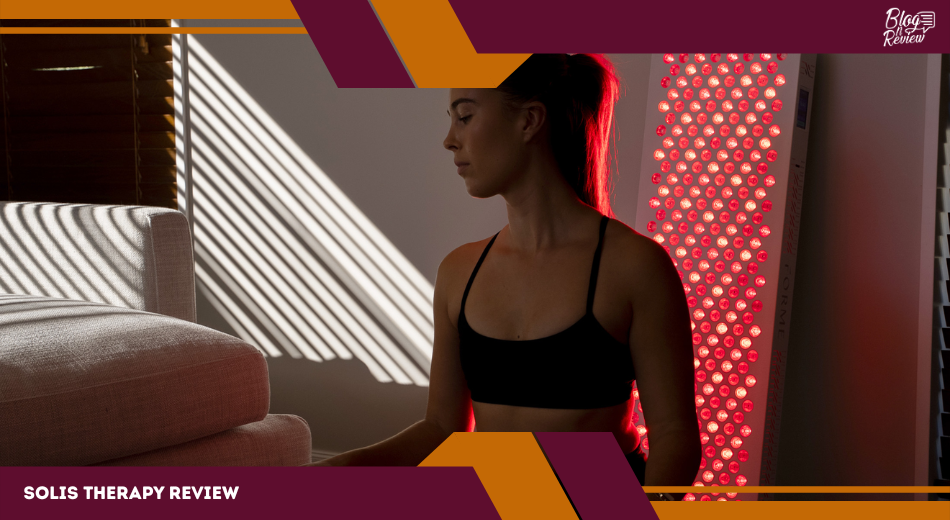
The Solis Spectrum SOLO 2.0 is not a full-body red light therapy wall. It is a compact targeted panel, which means it works best when you want to treat one area at a time. That could be your face for skin appearance, your neck and shoulders after desk work, your knees after training, or a localized recovery area. Solis lists the SOLO 2.0 with 60 x 5W LEDs, 300W total power, and an irradiance figure of around 180mW/cm² at 6 inches. The panel uses five wavelengths: 630nm and 660nm visible red light, plus 810nm, 830nm, and 850nm near-infrared light. Its listed dimensions are 34.5cm x 23cm x 9.5cm, and the panel weighs about 4.5kg / 10lbs. The five-wavelength setup is one of the biggest selling points. Budget red light panels often use only 660nm red and 850nm near-infrared. That combination is common and still useful, but Solis adds 630nm, 810nm, and 830nm to broaden the spectrum. In practical terms, red wavelengths are generally associated with more surface-level use, such as skin appearance, while near-infrared wavelengths are often used for deeper tissue exposure. This does not guarantee better results for everyone, but it does make the SOLO 2.0 more technically complete than many entry-level panels.
The compact build also matters. A large panel may be better for full-body recovery, but it is harder to store, move, and use casually. The SOLO 2.0 is more of a “daily routine” panel. You can place it on a desk, use it while sitting, or target one area without turning your room into a treatment studio. Solis also lists safety-related features including flicker-free design, 0 EMF claims, and manufacturing through an FDA/CE approved factory. It is important to phrase that carefully: this is not the same as saying the device itself is FDA-approved to diagnose, treat, or cure disease. Solis also states that its products are not intended to diagnose, treat, cure, or prevent disease, and that results may vary.
First Impressions
The first impression of Solis Therapy is premium, especially compared with bare-bones red light therapy panels. The branding is modern, the product pages are polished, and the SOLO 2.0 is positioned as a more serious wellness device rather than a cheap gadget. The design appears clean and practical. You get a compact rectangular panel, strong output claims, a simple treatment workflow, and support accessories such as blue light blocking glasses depending on the offer. Solis says the SOLO 2.0 is made for targeted therapy and covers approximately 2–3 square feet per session, which is realistic for a panel this size.
Setup should be straightforward for most users. The typical process is to place the panel near the treatment area, expose the skin directly, avoid thick skincare barriers, and use short sessions consistently. Solis itself recommends direct skin exposure because clothing can block therapeutic wavelengths. The main expectation to set is patience. Red light therapy is not like taking a painkiller and expecting a clear result within 30 minutes. Most users should think in weeks, not days. Skin texture, post-workout recovery, sleep routine benefits, and joint comfort are all areas where consistency matters.
Performance and Real-World Experience
For targeted use, the Solis Spectrum SOLO 2.0 makes the most sense. It is powerful enough on paper to feel like a serious home panel, but still compact enough to fit into a daily routine. The strengths start with coverage and wavelength variety. If your main goal is facial skin appearance, neck lines, acne-prone skin, shoulder tightness, or knee discomfort, a targeted panel can be more practical than a full-body setup. You can use it while sitting, reading, stretching, or winding down in the evening. The five wavelengths are also a strong point. While more wavelengths do not automatically mean better results, the SOLO 2.0 covers the major red and near-infrared ranges people usually look for in a premium red light panel. That makes it more attractive than cheaper panels that only offer 660nm and 850nm.
The weakness is treatment size. If you want to treat your entire back, legs, torso, and shoulders in one session, the SOLO 2.0 will feel limited. You would need to reposition it multiple times, which makes sessions longer. For athletes or users managing widespread soreness, Solis’ larger Surge, Supreme, or Studio panels may be more practical. Another practical limitation is that red light therapy requires routine. Some customers see noticeable improvements, but others may feel underwhelmed if they use the panel inconsistently or expect dramatic medical-level outcomes. Cleveland Clinic notes that red light therapy shows promise for skin-related uses, but also states that more research is needed and that its full effectiveness for many promoted uses is still being determined. In short, the performance case for Solis is strongest when you treat it as a consistent wellness tool, not a miracle device.
Pricing and Value Analysis
At the time checked, Solis listed the SOLO 2.0 Red Light Panel at £399, reduced from £599, with a displayed saving of £200. The product page also showed a limited-time code, SOLSTICE, for 15% off, though discount codes can change and should always be verified at checkout. Solis also promotes free express shipping, a 90-day money-back trial, and a 3-year extended warranty. The brand states that if users do not see results, they can return the device for a full refund, with the return process subject to the condition of the product and return-shipping terms.
Is the price justified?
For a compact panel, Solis is not the cheapest option. Hooga’s HG300, for example, is listed at $199 and uses 60 LEDs with 660nm and 850nm wavelengths. Mito Red Light’s MitoPRO 300+ is listed at $369 with 60 LEDs, making it another strong competitor in the targeted-panel category. Where Solis tries to justify the premium is through the five-wavelength setup, strong listed irradiance, warranty, trial period, and brand presentation. If you want the lowest-cost red light therapy panel, Solis is not the obvious winner. But if you want a more polished, premium-feeling targeted panel with broader wavelengths and a generous trial window, the value becomes more compelling.
Pros and Cons
| Pros | Cons |
| Five wavelengths: 630nm, 660nm, 810nm, 830nm, 850nm | More expensive than basic two-wavelength panels |
| Strong listed irradiance for a compact panel | Not ideal for full-body coverage |
| Compact and easier to use daily | Results depend heavily on consistency |
| 90-day trial adds buyer confidence | Solis is still a relatively young company |
| 3-year warranty | Some marketing claims should be viewed cautiously |
| Positive Trustpilot rating and customer-service feedback | Limited independent third-party lab data visible compared with some competitors |
| Good option for targeted skin, recovery, and joint routines | Larger users or athletes may need a bigger panel |
Explore BRAND Collections
Who Should Buy Solis Therapy?
Solis Therapy is best for people who want a premium home red light therapy panel and are willing to pay more than budget pricing for better specs, cleaner branding, and a stronger trial/warranty package. The SOLO 2.0 is especially suitable if your goals are targeted. If you mostly care about your face, neck, scalp, shoulder area, knees, elbows, or a specific recovery spot, the compact size is a benefit rather than a drawback. It is easier to set up and easier to use consistently. It is also a good choice for beginners who are serious enough to avoid the cheapest devices but not ready to invest in a full-body panel. The 90-day trial helps reduce risk for first-time buyers.
| Buyer Type | Recommendation |
| Skincare-focused user | Strong fit |
| Post-workout recovery user | Good fit for targeted areas |
| Beginner wanting premium panel | Good fit |
| Full-body recovery user | Consider a larger Solis panel |
| Budget buyer | Compare Hooga or entry-level alternatives |
| Skeptical first-time buyer | Trial period makes Solis easier to test |
Who Should Avoid Solis Therapy?
Skip Solis Therapy if your main priority is the lowest possible price. You can find cheaper red light panels with basic 660nm and 850nm wavelengths. They may not feel as premium, but they can still be enough for beginners. You may also want to avoid the SOLO 2.0 if you need full-body treatment. A compact panel requires repositioning, and that can become annoying if your goal is to treat legs, back, torso, and shoulders daily. People with serious medical conditions should also be careful. Red light therapy should not replace medical care. Solis itself says its products are not intended to diagnose, treat, cure, or prevent disease, and users should consult qualified healthcare professionals before changing medical treatment. Finally, avoid it if you are expecting overnight results. Red light therapy is a routine-based tool. If you know you will only use it once every few weeks, the return on investment will probably be poor.
Customer Feedback Summary
Solis Therapy’s Trustpilot profile shows a 4.8 rating from 119 reviews, with 91% listed as 5-star and 6% listed as 4-star at the time checked. Trustpilot also notes that Solis has replied to 100% of negative reviews and typically replies within 24 hours. Positive customer themes include customer service, delivery experience, product build, skin glow, relaxation, sleep routine support, and perceived recovery benefits. Several reviews mention helpful communication and support before or after purchase. The negative feedback is lighter in volume, but the realistic concerns are worth noting. Some users may not see the results they hoped for, especially for harder-to-measure goals like hair growth, chronic pain, or deep recovery. One lower-rated review mentioned using a large panel for months without seeing a difference in skin or hair, which is a good reminder that results are not guaranteed.
On Reddit, discussion around Solis Therapy is more cautious and less developed than Trustpilot. In one r/redlighttherapy thread comparing UK brands, a user noted Solis’ five wavelengths and 90-day guarantee, while commenters also raised questions about limited company information and shipping/manufacturing origin. Overall, customer feedback is positive, but not perfect. The strongest trust signal is Trustpilot. The weakest signal is the limited depth of independent Reddit discussion compared with older brands.
Competitor Comparison
| Brand / Model | Approx. Price Checked | Wavelengths / Specs | Warranty / Trial | Best For |
| Solis Spectrum SOLO 2.0 | £399 sale price | 60 LEDs, 630nm, 660nm, 810nm, 830nm, 850nm, listed ~180mW/cm² at 6 inches | 90-day trial, 3-year warranty | Premium targeted home use |
| Hooga HG300 | $199 | 60 LEDs, 660nm and 850nm, over 73mW/cm² at 6 inches | 60-day trial, 3-year warranty | Budget-friendly targeted use |
| MitoPRO 300+ | $369 | 60 LEDs, targeted panel, strong listed irradiance | Brand lists multiple panel options and third-party testing data | Buyers wanting established panel brand |
| PlatinumLED BIOMAX 300 | $659 | 100 LEDs, 7-wavelength system, 3-year warranty | 3-year warranty | Buyers wanting a higher-spec targeted panel |
| Joovv Solo 3.0 | $1,699 | Premium modular system, app features, medical-grade positioning | 60-day return, 2-year warranty | Buyers wanting premium modular expansion |
Solis sits in the middle of the market. It is more expensive than Hooga HG300 but far less expensive than Joovv Solo 3.0. Compared with MitoPRO 300+, Solis has a higher UK-listed sale price but offers five wavelengths and a generous 90-day trial. Compared with PlatinumLED BIOMAX 300, Solis has fewer LEDs but is cheaper and still has a broad wavelength mix. The best competitor for budget buyers is Hooga. The best competitor for technical buyers may be Mito Red Light or PlatinumLED. The best competitor for premium modular setups is Joovv. Solis is best for buyers who want a premium-feeling, targeted panel without moving into Joovv-level pricing.
Is Solis Therapy Legit?
Yes, Solis Therapy appears to be a legitimate brand. It has an active UK company listing, public contact details, an official ecommerce store, a visible Trustpilot profile, a 90-day trial, and a 3-year warranty. That said, “legit” does not mean every claim should be accepted without context. Red light therapy is promising, but not a cure-all. Solis also includes a responsible disclaimer that results vary and that its products are not intended to diagnose, treat, cure, or prevent disease. So the fair answer is: Solis Therapy is legit as a company and product seller, but buyers should keep realistic expectations about red light therapy results.
Is Solis Therapy Worth It?
Solis Therapy is worth it if you want a premium targeted red light panel and plan to use it consistently. The SOLO 2.0 has strong specs, a useful wavelength range, a compact design, and a trial period that reduces buyer risk. It is less worth it if you are budget-sensitive, need full-body coverage, or want a device backed by more visible independent lab testing. In that case, compare Hooga, Mito Red Light, and PlatinumLED before buying. For most home users researching a Solis red light therapy review, the answer is this: Solis is a good buy when purchased on sale, especially for skincare, localized recovery, and daily wellness routines. It is not the cheapest panel, but it offers a strong overall package.
FAQs
1. What is Solis Therapy?
Solis Therapy is a wellness-tech brand that sells home red light therapy panels, portable devices, bundles, and accessories. Its Spectrum Series includes compact targeted panels and larger body panels.
2. Is Solis Therapy legit?
Yes, Solis Therapy appears legitimate. Solis Therapy Ltd is listed as an active UK company, and the brand has public customer reviews, contact details, warranty terms, and a 90-day trial.
3. What is the Solis Spectrum SOLO 2.0?
The Solis Spectrum SOLO 2.0 is a compact red and near-infrared light therapy panel with 60 LEDs, five wavelengths, and a targeted coverage area for face, neck, shoulders, joints, and localized recovery zones.
4. How much does Solis Therapy cost?
At the time checked, the Solis Spectrum SOLO 2.0 was listed at £399, reduced from £599. Prices, sales, and discount codes can change, so check the official checkout page before buying.
5. Does Solis Therapy have a discount code?
The Solis product page displayed a limited-time code, SOLSTICE, for 15% off at the time checked. Discount codes may expire, so verify the active offer before purchase.
6. What wavelengths does Solis SOLO 2.0 use?
The SOLO 2.0 uses 630nm and 660nm red light plus 810nm, 830nm, and 850nm near-infrared light.
7. Is Solis Therapy good for skin?
Solis may be useful as part of a skincare routine, especially for people interested in red light therapy for skin appearance. However, results vary and red light therapy should not be treated as a guaranteed fix for acne, wrinkles, or pigmentation.
8. Is Solis Therapy good for pain relief?
Some people use red and near-infrared light for joint comfort and recovery, and medical sources describe red light therapy as promising for some pain and inflammation applications. It should not replace medical treatment for serious pain or injury.
9. What do Solis Therapy Trustpilot reviews say?
Solis Therapy has a 4.8 Trustpilot rating from 119 reviews at the time checked. Positive themes include customer service, delivery, skin appearance, relaxation, and recovery-related feedback.
10. What do Solis Therapy Reddit reviews say?
Reddit discussion is limited. Some users compare Solis with other UK brands and mention its five-wavelength design and 90-day guarantee, while others raise cautious questions about company information and shipping/manufacturing.
11. Is Solis SOLO 2.0 better than Hooga HG300?
Solis SOLO 2.0 offers more wavelengths and a more premium package, while Hooga HG300 is much cheaper and uses the classic 660nm/850nm setup. Solis is better for premium buyers; Hooga is better for budget buyers.
12. Should I buy Solis Therapy?
Buy Solis Therapy if you want a premium targeted panel, value the 90-day trial, and will use it regularly. Skip it if you want the cheapest panel or need full-body coverage from one device.
Final Verdict
Solis Therapy is one of the more interesting newer red light therapy brands because it combines premium design, broad wavelength coverage, a strong trial period and positive public customer feedback. The Solis Spectrum SOLO 2.0 is the best fit for people who want targeted red light therapy for the face, neck, shoulders, joints, or specific recovery areas. Its five-wavelength setup gives it a technical advantage over many budget panels, and the 90-day trial makes the purchase feel less risky. However, Solis is not perfect. It is pricier than entry-level competitors, the company is still young, and some wellness claims should be interpreted carefully. Red light therapy can be a useful addition to a routine, but it is not a shortcut, cure, or replacement for professional care.
Solis Therapy is best for buyers who want a premium targeted panel and are willing to pay more for stronger specs, better presentation, and a more reassuring trial/warranty package. Budget buyers should compare Hooga. Technical buyers should also compare Mito Red Light and PlatinumLED. Full-body users should consider a larger Solis panel instead of the SOLO 2.0.
Shop BRAND Now
Leave a Reply
Your email address will not be published. Required fields are marked
Can I write you?
Sign up to get my weekly newsletter.