Aipas Bike Review 2026: Powerful Budget E-Bikes, but Are They Worth It?
-
September 03 , 2026
-
38
Quick Verdict
| Review factor | Verdict |
| Overall rating | 7.8/10 |
| Best for | Value-focused riders wanting a powerful, feature-rich e-bike |
| Standout strengths | Strong motors, fat tires, comfortable designs, competitive sale prices |
| Main drawbacks | Heavy frames, optimistic maximum-range claims, complex return logistics, certification concerns worth investigating |
| Short summary | Aipas offers considerable performance for the money, particularly in its M-series. The bikes can suit recreational riding and mixed terrain, but buyers should verify current safety certification and local e-bike laws before ordering. |
Aipas Bike Review 2026
A sub-$1,000 e-bike promising a powerful motor, full suspension, fat tires and an exceptionally long range naturally attracts attention. It also raises an obvious question: what compromises make that price possible? That is the central issue in almost every Aipas bike review. On paper, models such as the M2 Pro offer the specifications of considerably more expensive electric bikes. Customer feedback frequently praises their speed, sturdy construction and enjoyable ride. Independent testing has also found genuine strengths, especially in acceleration and hill climbing.
The less flattering side of the story is important. Aipas bikes are heavy, some advertised range figures represent favorable rather than typical conditions, and after-sales service is primarily handled at a distance. More significantly, recent reporting has raised questions about how safety certifications were represented.
This review examines the M2 Pro, M2 Max, M1 Pro, C1 and C2, along with pricing, ownership costs, customer service and safety considerations. The goal is not to declare every Aipas bike a bargain or dismiss the entire range. It is to identify which riders are likely to appreciate one and which should shop elsewhere.
Check Today's Price
What Is Aipas Bike?
Aipas is a direct-to-consumer electric-bike brand selling commuter, folding, fat-tire, step-through and off-road-oriented models. Its appeal rests largely on aggressive pricing: buyers receive large batteries, powerful rear-hub motors and extensive equipment without paying premium dealer-brand prices. The M-series consists of full-size fat-tire bikes intended for riders who want stability and substantial motor assistance. The M2 uses a traditional step-over frame, while the M1 provides easier step-through access. Pro and Max variants allow shoppers to choose between a lower entry price and upgraded components.
The C1 and C2 target riders who value practicality. The C1 is a compact step-through model, while the C2’s folding frame is better suited to storage or transportation—although neither should be confused with an ultra-light folding bicycle. Aipas therefore occupies the crowded space between entry-level commuter bikes and more expensive specialist e-bikes. Its primary audience includes recreational riders, heavier adults, occasional commuters and shoppers who prioritize motor power over low weight or local dealer support.
Aipas Model Comparison
Specifications and sale prices change, so confirm the current configuration before purchasing.
| Model | General design | Best suited to | Main consideration |
| Aipas M2 Pro | Full-size step-over fat-tire bike | Taller riders, mixed terrain and powerful recreational riding | Heavy and large |
| Aipas M2 Max | Upgraded M2 with premium components | Riders wanting better braking and suspension hardware | Higher price |
| Aipas M1 Pro | Step-through fat-tire bike | Riders who want easier mounting without losing M-series capability | Still bulky and heavy |
| Aipas C1 | Compact step-through utility bike | Everyday riding and approachable ergonomics | Less trail-focused than M-series |
| Aipas C2 | Folding compact e-bike | RV use, storage-conscious buyers and shorter riders | Foldable does not necessarily mean easy to lift |
| Aipas C1/C2 Max | Higher-spec compact variants | Buyers wanting upgraded equipment in a smaller format | Compare price carefully with established competitors |
Key Features
Powerful Rear-Hub Motors
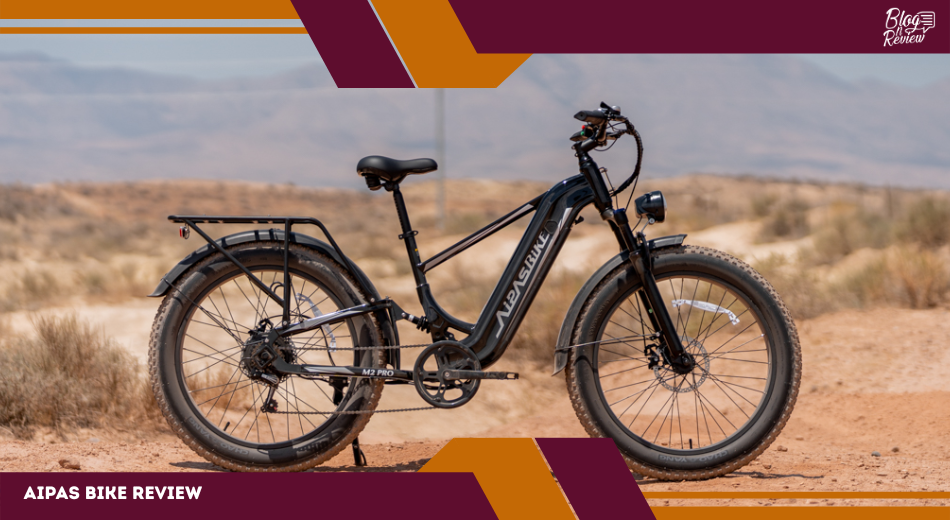
Motor power is one of the strongest reasons to consider Aipas. The M2 Pro product page currently lists a peak output of 1,800 watts and 110 Nm of torque. That is considerably more aggressive than a conventional 250- or 500-watt commuter. The extra assistance is useful for hills, heavier riders and large fat tires. Independent testing by Electric Bike Report found the M2 Pro fast and capable on climbs, whether ridden with pedal assistance or throttle control. The tester also noted that its throttle delivered substantial power without feeling uncontrollably abrupt. Peak wattage should not be confused with continuous nominal power, however. Buyers must also check state and municipal regulations. A bike capable of speeds exceeding standard Class 1, 2 or 3 limits may not be legal on every public bicyce path.
Removable Batteries and Advertised Range
Aipas lists a 48V 17.5Ah removable battery for the M2 Pro, equivalent to approximately 840Wh. The company advertises up to 85 miles with pedal assistance and around 36 miles using electric power alone. Those numbers should be treated as upper limits, not guarantees. Range varies with rider weight, assistance level, throttle use, speed, wind, hills, tire pressure and temperature. A heavy fat-tire bike traveling quickly can consume energy much faster than a lightweight commuter used at a low assistance level. For purchasing purposes, plan around your demanding rides rather than the largest number on the product page. Riders who use generous pedal input at moderate speeds will get closer to the advertised pedal-assist figure than those relying heavily on the throttle.
Fat Tires and Suspension
The M2 Pro uses 26-by-4-inch tires with front and rear suspension. Fat tires increase contact with the surface and help the bike feel planted on gravel, broken pavement and loose ground. They also absorb smaller road imperfections, complementing the suspension system. This makes the M-series comfortable for recreational cruising and poorly maintained roads. The tradeoff is efficiency. Wide tires produce more rolling resistance, and the suspension, wheels and reinforced frame contribute to the bike’s substantial weight. If most rides occur on smooth urban pavement, a lighter commuter may feel more responsive and be easier to maneuver.
High Payload Ratings
The M2 Pro page advertises a maximum load of 500 pounds. A generous rating can appeal to larger riders and people planning to carry cargo. A payload figure does not mean every rider within the limit will enjoy the same fit or handling. Frame size, reach, saddle position, braking performance and tire pressure remain important. Aipas currently recommends the M2 Pro for riders between 5 feet 8 inches and 7 feet 6 inches, making it a poor default choice for many shorter adults.
Displays, Throttles and Riding Modes
The M2 Pro includes an LCD showing speed, distance, battery status and assistance information. Five pedal-assist levels let riders balance acceleration against battery use, while the throttle provides assistance without pedaling where local rules allow it. The Shimano seven-speed drivetrain gives the rider basic gearing for starting, climbing and continuing home if the battery becomes depleted. It is functional equipment rather than premium performance hardware, which is reasonable at this price.
Included Equipment
Aipas models commonly arrive with integrated lighting and practical accessories, although bundles vary. The M2 Pro is sold in configurations that may include racks or fenders. Always review the selected bundle rather than relying on promotional photography. A low headline price can become less attractive if the rack, fenders, upgraded seat or preferred throttle must be added separately.
First Impressions and Setup
The first impression of an M-series Aipas is likely to be its physical presence. This is not a discreet city bicycle with a small hidden battery. Its wide tires, suspension hardware and substantial frame make its intended purpose obvious. Aipas says the M2 Pro arrives approximately 90% assembled. Typical final setup involves fitting the front wheel, handlebar, pedals and accessories, checking the brakes and inflating the tires. The company provides installation material and a basic toolkit. Even when assembly seems straightforward, a pre-ride inspection matters. Check handlebar alignment, axle security, pedal orientation, brake operation, tire pressure and every accessible fastener. Riders without bicycle-maintenance experience should budget for inspection by a qualified mechanic. Packaging and delivery experiences are generally positive in customer reviews, with many buyers reporting quick arrival and manageable assembly. Damage can still occur with any heavy direct-to-consumer bike, so photograph the box and components before discarding the packaging.
Performance and Real-World Experience
Acceleration and Hill Climbing
The M2 Pro’s strongest quality is its willingness to move. Its motor has enough output to make starts easy and maintain useful assistance on inclines. That capability is particularly valuable for riders who find conventional cycling difficult because of hills or physical effort. It is also why responsible speed management matters. A heavy bike gathers momentum, and stopping distances increase with speed, rider weight and loose surfaces. New riders should become comfortable with braking and low assistance settings before unlocking higher performance.
Comfort and Handling
Fat tires and suspension create a forgiving ride over cracked roads and light trails. The bike feels stable rather than nimble. That inspires confidence in a straight line but can make tight maneuvering, stairs and vehicle loading awkward. A rider who can roll directly from a garage may barely notice the weight. Someone carrying the bike into an apartment will notice it every day. The M2 Pro’s listed net weight is approximately 81 pounds, excluding its roughly nine-pound battery. Independent testing has reported an even higher ready-to-ride weight depending on configuration and accessories.
Braking
The M2 Pro uses disc brakes, while the M2 Max is positioned as the upgraded option for buyers seeking hydraulic braking and other refinements. Hydraulic brakes generally require less hand effort and provide better modulation than basic mechanical systems. For frequent steep descents, higher rider weights or sustained high-speed use, braking quality should carry more weight than headline motor power. This is one area where selecting the Max or considering a competing bike with well-supported hydraulic components—may be worthwhile.
Everyday Practicality
For recreation, country roads and mixed surfaces, the M-series makes sense. For short urban commuting, it may be more bike than necessary. The M1 Pro’s step-through frame improves accessibility, while the compact C1 and folding C2 are easier choices for shorter riders or limited storage. Nevertheless, verify each model’s actual weight and folded dimensions. A folding hinge does not transform a substantial e-bike into something most people will casually carry.
Expected Range
Maximum advertised range is achieved under controlled or favorable conditions. A realistic owner should expect the number to fluctuate significantly. High assistance, throttle-only riding, cold weather, soft terrain and speeds above 25 mph can dramatically reduce range. Moderate pedal-assist use on flatter ground gives the battery its best chance. Maintaining tire pressure also makes a noticeable difference on four-inch tires.
Pricing and Value Analysis
At the time of research, Aipas listed the M2 Pro at $899, reduced from a much higher reference price. The same comparison section showed the M1 Pro at $899 and M2 Max at $1,099. These are promotional prices and may change. The value proposition is undeniably strong at those levels. Few sub-$1,000 e-bikes combine a large battery, full suspension, fat tires, throttle and high-output motor. Aipas also advertises a one-year limited warranty, delivery across 49 states in approximately three to eight days and a 14-day trial on the M2 Pro page.
Value is not simply the number of features per dollar, though. A heavier bike can be harder to service, shipping returns can be complicated, and replacement components may require coordination with the manufacturer. A locally supported e-bike with more modest specifications may offer better long-term value for an owner who cannot perform basic repairs.
Aipas is most convincing when the buyer genuinely needs its power and terrain capability. Paying for an M2 Max makes sense when upgraded brakes and ride hardware matter. If the bike will only cover flat, paved neighborhood routes, a lighter model from the C-series—or a conventional commuter from another brand may be the smarter purchase.
Explore BRAND Collections
Aipas Bike Pros and Cons
| Pros | Cons |
| Impressive motor performance for the price | M-series bikes are difficult to lift and transport |
| Stable fat-tire handling | Maximum range figures may be unrealistic for aggressive riding |
| Step-over, step-through and folding choices | Direct-to-consumer service lacks the convenience of a local dealer |
| Large removable batteries | Some models can exceed common legal e-bike speed limits |
| Comfortable on rough roads and light trails | Basic components may need adjustment or eventual upgrades |
| Competitive promotional bundles | Current safety documentation should be independently verified |
Who Should Buy an Aipas Bike?
Aipas is best suited to a value-conscious rider who wants substantial assistance, understands the implications of owning a heavy direct-to-consumer bike and has secure ground-level storage. The M2 Pro is the standout for taller riders who prioritize power and mixed-terrain comfort. The M2 Max is more attractive for demanding riders who place greater importance on braking and suspension upgrades. The M1 Pro provides similar appeal with easier step-through access. Shorter riders, RV owners and buyers with less storage space should start with the C1 or C2 rather than forcing themselves onto an oversized M-series frame.
| Rider profile | Recommendation |
| Tall rider exploring gravel and rough roads | M2 Pro |
| Rider wanting improved components | M2 Max |
| Rider needing step-through access | M1 Pro |
| Shorter or casual neighborhood rider | C1/C1 Max |
| RV or storage-conscious owner | C2/C2 Max |
| Apartment resident carrying the bike upstairs | Consider a lighter competitor |
Who Should Avoid It?
Avoid the heavier Aipas models if you need to carry your bicycle regularly. Weight that seems manageable on a specification sheet can become a serious inconvenience around stairs, vehicle racks and tight hallways. Aipas may also be unsuitable for riders who expect hands-on dealer support. A direct-to-consumer company can ship parts and provide remote instructions, but it cannot reproduce the convenience of taking a dealer-supported bike back to the shop. People who want verified legal compliance with no additional research should proceed cautiously. Check the model’s programmed speed, motor classification and current certification documents against local requirements before ordering.
Is Aipas Bike Legit?
Yes, Aipas is an operating e-bike retailer with a large customer base, active product support channels and thousands of public reviews. Its website lists email and telephone support, and both Trustpilot and the Better Business Bureau host substantial customer-review histories. “Legit,” however, does not mean risk-free.
Recent reporting described legal action involving alleged misleading use of UL safety marks by companies manufacturing Aipas-branded bikes. WIRED reported that the matter resulted in a permanent injunction against improper use of UL marks, without an admission of wrongdoing. It also found inconsistencies in the status of some certification records.
Aipas currently links to SGS documents for its M2 Pro and describes its battery as SGS certified to UL 2271. Buyers should check the live status and exact model coverage of any certification rather than relying exclusively on a logo or downloadable document. This issue does not prove that every Aipas battery or bicycle is unsafe. It does mean safety claims deserve verification particularly for a large lithium-ion product stored or charged indoors.
Customer Feedback Summary
The overall pattern across Aipas bike reviews is positive. Trustpilot’s summary highlights build quality, enjoyable riding, delivery and responsive service, while the BBB displays a high average drawn from a large number of reviews.
Frequent compliments include:
- Strong acceleration and a fun riding experience
- Sturdy-feeling frames
- Quick delivery
- Straightforward assembly
- Helpful responses from customer service
- Good perceived value
Negative reports are less common but important. They mention damaged or faulty components, brake noise, difficulty resolving certain reimbursement or return requests, and frustration with packaging a heavy bicycle for shipment. Customer ratings should be treated as one input rather than proof of performance. Early reviews often describe delivery and first rides, not battery health, component wear or support several years later.
Aipas vs Competitors
| Brand | Typical strength | Main compromise | Best for |
| Aipas | High power and many features at promotional prices | Weight, remote service and certification questions | Performance-focused value buyers |
| Lectric | Popular folding and utility designs with a large owner community | Some models remain heavy | Practical commuters and RV owners |
| Aventon | Refined integration and stronger dealer availability | Usually costs more | Buyers wanting local support |
| Velotric | Polished commuter-focused bikes and approachable ride quality | Less emphasis on extreme motor figures | Everyday urban riders |
| Ride1Up | Strong performance-to-price balance | Direct-to-consumer setup remains necessary | Experienced value shoppers |
| Rad Power Bikes | Utility accessories and established brand recognition | Price and weight can be higher | Cargo and practical daily riding |
Aipas wins on raw specification value. Aventon and some Velotric models are usually more appealing when refinement and dealer access matter. Lectric is a natural alternative to the C2 for buyers prioritizing folding utility, while Ride1Up competes closely for performance-minded shoppers.
Frequently Asked Questions
Is Aipas a good e-bike?
Aipas can be a good e-bike for riders who value motor power, fat-tire stability and competitive pricing. Its weight, remote support model and safety-certification history should be considered before purchase.
Is Aipas Bike legit?
Aipas is a real direct-to-consumer e-bike company with thousands of public customer reviews. Buyers should still verify current warranty terms, model certification and return conditions.
How fast does the Aipas M2 Pro go?
Aipas lists a top speed of up to 36 mph for the M2 Pro. Local regulations may restrict where or whether the bike can be operated at that speed.
What range does the Aipas M2 Pro provide?
The company advertises up to 85 miles with pedal assistance and approximately 36 miles in electric-only use. Actual range depends heavily on speed, terrain, rider weight, weather and assistance level.
What is the difference between the Aipas M2 Pro and M2 Max?
The M2 Max is the upgraded version, aimed at buyers wanting better braking and terrain-focused components. Compare the live specification tables because equipment can change.
Is the Aipas M1 Pro better for shorter riders?
Its step-through frame is easier to mount than the M2’s step-over design, but buyers must still check minimum rider height and total bike size. The C-series may suit shorter riders better.
Is the Aipas C2 easy to transport?
Its folding frame improves storage flexibility, but it remains an electric bike with a motor, battery and substantial frame. Check the current weight before assuming you can lift it easily.
Do Aipas bikes arrive assembled?
Popular models arrive largely preassembled, but final installation and a thorough safety check are required. Professional inspection is sensible for inexperienced owners.
Does Aipas offer a warranty?
The company advertises a one-year limited warranty on its e-bikes. Read the current policy for component-specific coverage, exclusions and claim requirements.
Can an Aipas bike be returned?
Aipas advertises a 14-day trial on the M2 Pro page. Return eligibility, condition requirements, shipping charges and restocking rules may apply, so inspect the live policy before purchase.
Are Aipas batteries UL certified?
Aipas links to SGS documentation and states that the M2 Pro battery is certified to the UL 2271 standard. Because certification status and model coverage can change, verify the record directly before ordering.
Are Aipas e-bikes legal?
Legality depends on motor configuration, programmed speed, throttle use and local rules. Some advertised performance levels exceed common Class 1–3 limits.
Final Verdict: Are Aipas Bikes Worth It?
Aipas bikes offer a remarkable amount of hardware for their promotional prices. The M2 Pro is powerful, comfortable over mixed surfaces and independently proven to be capable on hills. The M2 Max improves the formula for riders willing to spend more, while the M1 Pro and C-series make the lineup accessible to different body sizes and storage needs.
The compromises are meaningful. These are heavy machines, advertised maximum range should not be treated as normal range, and direct-to-consumer support requires more owner involvement. Buyers should also independently confirm the current safety-certification status of the exact model and battery.
For a mechanically confident rider with ground-level storage who wants high performance below the price of many dealer brands, Aipas can represent strong value. Riders wanting a lightweight commuter, assured local service or the clearest possible certification history should consider Aventon, Velotric, Lectric or another dealer-supported option.
Shop BRAND Now
Leave a Reply
Your email address will not be published. Required fields are marked
Can I write you?
Sign up to get my weekly newsletter.