Imagine being told that one small change to your bedroom could make your nights more restful: place a conductive cover on the mattress, connect it to a properly grounded outlet, and go to sleep as usual. No complicated routine, no special exercises, and no need to rearrange your day. It is an appealing proposition, especially for people who feel they have already tried every sleep accessory on the market.
Down To Ground builds its product range around that proposition. Its best sellers include a grounding mattress cover, a compact mat, a pillow cover and bundles intended to bring the same concept into different parts of daily life. The brand describes earthing as a way to reconnect electrically with the Earth and advertises potential benefits involving sleep, comfort, inflammation and recovery.
Those are significant health claims, so this review takes a more careful approach than a promotional product roundup. We will explain what grounding means, how indoor products are supposed to function, what published research actually establishes, and which Down To Ground item makes sense for different routines. We will also compare sizes, listed prices, accessories, customer feedback, electrical precautions and the return policy. This is a research-based buying guide, not a firsthand product test or a promise of medical results.
Compare the mattress cover, desk or foot mat, pillow cover and bundle options before choosing a setup.
Browse Down To Ground →Down To Ground at a Glance
Best for: Curious shoppers who want to experiment with indoor electrical grounding and understand its limitations.
Most practical starter: Down To Ground Mat for shorter, seated sessions.
Best overnight setup: Mattress Cover in half or full size, selected for the bed and user.
Critical caution: Clinical benefits are not established, and outlet safety must be checked before use.
What Is Grounding or Earthing?
Grounding, often called earthing, refers to making an electrical connection between the body and the Earth. Outdoors, the concept is usually associated with direct contact with soil, grass or sand. Indoors, grounding products use conductive materials and a connection to an electrical ground, commonly through a compatible outlet's grounding contact. That is the mechanism the brand says its products are designed to provide.
This definition should be separated from another common meaning of grounding: psychological exercises such as noticing sights, sounds and physical sensations to manage anxiety. Those mental-health exercises do not require conductive products. Likewise, enjoying nature, walking and spending time outside can support well-being without proving that electrical contact itself is the active ingredient.
Down To Ground describes the Earth's charge as a potential source of restorative effects. Electrical connection is a measurable physical concept, but demonstrating a connection does not by itself establish a health benefit. This distinction is the foundation for evaluating the company's product claims responsibly.
How Do Indoor Grounding Products Work?
The basic system is straightforward. A conductive mattress cover, mat or pillow cover makes contact with the body, and a cord connects the product to a verified grounding point. Down To Ground supplies or sells region-specific wall adapters, grounding cords and socket testers. A properly installed product is intended to create electrical continuity with the ground connection; it is not an electrical heating pad or a powered massage device.
A grounding outlet must actually be wired correctly. A plug that physically fits the socket is not proof of a safe ground. The brand offers socket testers, but a tester cannot replace professional assessment of suspect wiring. If you live in an older building, have unusual outlets or do not understand the electrical installation, consult a qualified electrician before connecting a product to it.
Contact conditions also matter. Dry fabric, thick insulating layers, poor skin contact, worn connectors or damaged cords may interfere with the intended electrical path. The product's instructions are more reliable than improvised online hacks. Never modify a plug, connect to a live electrical terminal or bypass an adapter's safety design to make a grounding product work.
What Does the Science Actually Say About Grounding?
Research on earthing has attracted interest, but it is not mature enough to support the sweeping health promises often seen in advertisements. Cleveland Clinic notes that many studies are small or methodologically weak, and that grounding should not replace evidence-based care. Sleep Foundation similarly concludes that evidence for sleep improvement remains limited and that mechanisms and outcomes need more rigorous testing.
One notable randomized, double-blind, placebo-controlled study published in 2025 assigned 60 participants to a grounding or control mat for six hours daily over 31 days. Researchers reported improvements in several sleep and stress measures, with increased total sleep time relative to controls. Those findings are worth knowing about because they go beyond anecdotes. However, the researchers themselves identified the short study period and modest sample size as limitations and called for larger, longer trials.
That study does not demonstrate that Down To Ground's particular products treat insomnia, nor does it prove that grounding prevents inflammation-related disease, heals injuries, reverses neuropathy or replaces medication. It is a preliminary result involving a category of products. Different devices, user populations and measurement methods could produce different findings.
The responsible conclusion is neither that grounding definitely works nor that every user experience must be dismissed. People may enjoy a ritual or perceive better sleep, but a personal improvement can have several causes, including expectation, a change in bedtime routine and natural variation. Electrical connectivity and clinical effectiveness are two different questions.
Can Grounding Improve Sleep, Pain or Inflammation?
Sleep is the most relevant claimed benefit for the brand's mattress and pillow products. Some preliminary trials have reported favorable outcomes, but there is not yet a robust evidence base showing that a grounding mattress cover reliably improves sleep for the general population. Persistent insomnia can involve medical, psychological and environmental factors that a conductive cover cannot diagnose.
Claims about reduced pain, inflammation, swelling and faster healing deserve even greater caution. These outcomes can reflect serious underlying conditions, and testimonials do not establish cause and effect. A report of feeling less stiff after a few nights does not prove that the product altered inflammatory markers or treated a disorder. The company itself includes a disclaimer that its products are not intended to diagnose, treat, cure or prevent disease.
Anyone with persistent pain, swelling, neuropathy, sleep apnea symptoms or other health concerns should seek appropriate clinical assessment. Grounding products should not be used as a reason to delay diagnosis, stop prescribed medicine or disregard an established treatment plan. A wellness purchase can be optional; essential medical care is not.
Down To Ground Mattress Cover Review: The Flagship Bestseller
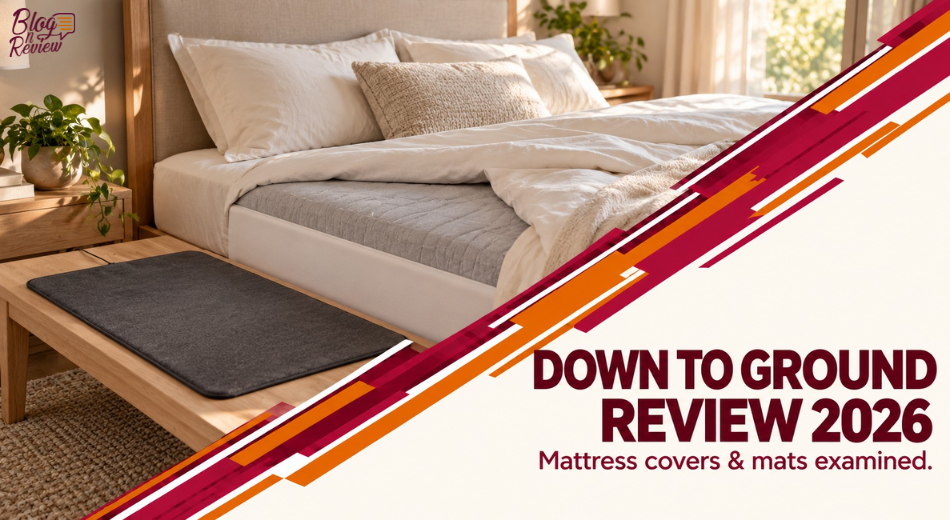
The Down To Ground Mattress Cover is the brand's flagship product and is identified on its storefront as a leading seller. It is designed for overnight use, with a thin conductive surface placed on the mattress and connected through the supplied grounding system. The product page emphasizes an ultra-thin 2 mm construction intended to remain unobtrusive beneath bedding.
Two main sizes are offered. The half-size option is approximately 70 by 180 cm, while the full-size option is approximately 140 by 180 cm. Adjustable straps are intended to help the cover fit common bed sizes, including double, queen and king configurations. The half size can be a sensible choice for one sleeper or someone who shares a bed with a partner who does not want the setup; the full size offers a broader contact area.
The official product page displayed a $190 price against a $330 reference price, with a 42% promotional reduction. Because the store supports multiple currencies and regions, buyers should verify their selected country and checkout currency. The price is a meaningful commitment for a product whose claimed clinical benefits remain uncertain.
From a practical perspective, the mattress cover is best suited to someone who wants to use a grounding device without adding another daytime task. It is less appealing to people who frequently change sleeping locations, have incompatible electrical arrangements or are uncomfortable with cords near the bed. Before ordering, confirm the bed dimensions, outlet position, adapter type and washing instructions.
How to Choose Between Half-Size and Full-Size Covers
Half size is not necessarily a lower-quality option; it is a different coverage decision. For one sleeper, a narrower conductive area may be enough for the intended physical contact, provided the product is installed as directed. For two people who both want to use the cover, the full-size version is the more intuitive choice. Neither option guarantees better sleep or greater therapeutic benefit.
Measure the actual mattress, not just its retail size label. Regional bed-size conventions vary, and a cover with straps can still sit differently on a thick pillow-top mattress. Check the current product diagram and whether the sheet or protector you intend to place over the cover is compatible with the manufacturer's instructions.
If you are primarily experimenting and do not want to commit to an overnight setup, the smaller floor mat may be a more economical starting point. It offers a different usage pattern, but it may help you determine whether you like incorporating the product into your routine.
Down To Ground Mat Review: A Flexible Entry Point
The Down To Ground Mat is intended for shorter sessions, commonly by placing it on the floor and resting bare feet on the conductive surface while seated. The brand describes a simple three-step setup: position the mat, connect the grounding cord and use a correctly grounded wall connection. It recommends wiping the mat with a damp cloth weekly.
The official storefront listed a single mat at $99, compared with a $200 reference price. Multi-mat offers on the product page showed lower per-unit prices for larger quantities, including $89 each for two and $84 each for three. These bundle figures can change, and buying extra mats makes sense only if there are genuinely multiple places where they will be used.
As a product, the mat has a practical advantage over the mattress cover: it can fit into a work-from-home routine or a reading corner without altering the bed. It is also easier to put away. The disadvantage is that the user must deliberately make contact during the session, and a small surface offers less freedom of movement than a bed cover.
The page displayed approximately 480 on-site reviews. Several customer comments describe improved sleep or physical comfort, but these reports are uncontrolled testimonials. They can inform expectations about ease of use and satisfaction, not establish that the mat treats swelling, sciatica or other medical conditions.
Down To Ground Pillow Cover Review: Compact and Travel-Oriented
The Down To Ground Pillow Cover is the smallest of the three featured personal-use products. It is marketed for people who want a grounding contact area around their pillow rather than across a mattress. The official store showed a $109 price against a $200 reference price, with roughly 17 reviews at the time of checking.
Its appeal is portability and a narrower footprint. Someone who does not want to install a full mattress cover may prefer a pillow-based setup, and the brand's customer feedback includes people describing use away from home. However, travel compatibility is not automatic: outlet types, safe grounding, available space and the correct regional adapter still need to be checked.
A pillow cover is not necessarily the best first purchase for everyone. If your head or face is not in reliable contact with the intended conductive area, the experience may differ from the advertised setup. And a pillow cover's smaller size does not mean its health benefits are more concentrated. Choose it for convenience and fit, not a promise of stronger effects.
Day & Night Bundle Review: Is the Package Better Value?
The Day & Night Bundle combines a mattress cover with a grounding mat and accessories intended to support both nighttime and seated daytime use. The official product listing specifies a mattress cover, mat, socket tester, two wall adapters and two grounding cords. It was displayed at $259 against a $539 reference price.
Compared with the individually advertised sale prices of $190 for the cover and $99 for the mat, the $259 bundle is $30 less before considering included accessories. That comparison is more meaningful than relying only on the larger reference-price percentage. It is still important to check whether the bundle includes the mattress size and regional adapters you need.
This is the logical package for a household that intends to use both formats. It is not automatically the best value for someone who will only use the mattress cover. The bundle also increases the number of cables and surfaces to maintain. As with the individual products, no clinical outcome should be assumed from purchasing more grounding equipment.
Other Bundles, Pet Products and Accessories
The brand also lists Deep Sleep, Cool Sleep and Pet & Parent bundles, along with a pet mat, grounding blanket, bamboo fitted sheet, ground rod, tester and replacement cords. The official catalogue showed the Grounding Pet Mat at $99, a Ground Rod at $59, a standard 15-foot cord at $29 and a socket tester at $30. A separate product tester was listed at $70.
Accessories are not interchangeable simply because their connectors look similar. The correct wall adapter depends on region, and a ground rod is an electrical installation component rather than a casual substitute for a tested outlet. Use manufacturer instructions and qualified professional advice where necessary.
Pet-focused wellness claims deserve the same evidentiary scrutiny as human claims. There is no reason to assume that a product treats an animal's inflammation or pain based on a handful of store reviews. If a pet shows signs of illness or discomfort, consult a veterinarian rather than relying on a conductive mat.
Down To Ground Product Comparison: Which One Fits Your Routine?
The best purchase depends on where you would use the product, how much space you have and whether you can verify a safe grounding connection. This table compares the advertised offerings as physical products; it does not rank medical effectiveness.
| Product | Intended use | Listed sale price | Best fit |
|---|---|---|---|
| Mattress Cover | Overnight bed contact | $190 | People seeking a dedicated sleep setup |
| Grounding Mat | Seated use with feet or hands | $99 | First-time buyers and desk routines |
| Pillow Cover | Smaller pillow-area contact | $109 | Compact or travel-minded setup |
| Day & Night Bundle | Mattress cover + mat + accessories | $259 | People who will use both formats |
| Grounding Pet Mat | Pet-area surface | $99 | Pet owners; no proven medical outcomes |
A Step-by-Step Buying Guide for First-Time Customers
Start with the intended setting. If you want a low-commitment seated routine, the mat is the most straightforward. If you specifically want an overnight product, choose between the half- and full-size mattress cover based on bed dimensions and number of users. If space and portability matter more, examine the pillow cover. Buy a bundle only when you expect to use every major component.
Next, confirm the electrical details. Select the appropriate plug region, identify a suitable outlet and use a proper socket test or qualified electrician to confirm the ground. Make sure the cord can reach without being stretched, pinched beneath furniture or creating a trip hazard. Do not assume an adapter changes unsafe wiring into safe wiring.
Then assess the return risk. Down To Ground's policy excludes used or opened products from ordinary returns for hygiene reasons. That is particularly important for a product whose perceived benefit may take time to assess. A buyer should not assume they can sleep on the cover for a month and then return it simply because they did not notice a change.
Finally, set a realistic goal. You might choose to track your sleep schedule, comfort and use of the product, but a personal log cannot prove a medical effect. Avoid interpreting every good night or bad night as evidence about grounding. If you are seeking treatment for a health condition, discuss proven options with a clinician first.
How to Set Up a Grounding Mattress Cover or Mat Safely
Read the exact product instructions before installation. For a mattress cover, place and secure the cover as directed, position the permitted bedding layers and connect the cord to the correct accessory. For a mat, position it on a stable, dry surface where your feet or hands can comfortably make contact. Keep the cable clear of rolling chair wheels, pets and walking paths.
Use only a properly grounded connection and the specified accessories. Do not use an outlet that sparks, feels loose or shows signs of damage. Stop using the product if a cord or connector becomes damaged. Cleveland Clinic cautions against using indoor grounding products during thunderstorms because of lightning-related electrical risk, and recommends professional outlet checks when wiring is uncertain.
Grounding is not a substitute for electrical safety practices. The device should never be wired to a live power contact, and users should not attempt to create a connection by cutting plugs or attaching wires to exposed metalwork. If you cannot establish a safe grounding point, do not improvise an installation.
Care, Cleaning and Long-Term Use
The mat's published instructions recommend wiping it weekly with water and a damp cloth. Bedding products may have different care requirements, so follow their individual labels rather than applying a single cleaning method to every conductive item. Harsh cleaning products, excessive heat or improper washing could damage conductive materials or connections.
Inspect cords, connection points and surfaces periodically. A product that appears intact may still need testing if its grounding continuity is in doubt. Store accessories so that plugs do not bend or collect moisture, and avoid leaving cables where children or animals can pull on them.
A product's ability to make an electrical connection is distinct from how long it remains cosmetically attractive or comfortable. Look for instructions on maintenance and testing, and contact the company if the product's continuity or fit changes.
Customer Reviews: What Do the Testimonials Tell Us?
The official site highlights a large number of customer testimonials. Its mattress cover was shown with more than 800 reviews, the mat with about 480, and the pillow cover with fewer than 20. Review counts varied slightly between pages when checked, so these should be treated as storefront snapshots rather than audited independent statistics.
Customers frequently describe improved sleep, less stiffness or an easier time relaxing. Such reports are meaningful as personal experiences, but they do not isolate the effect of grounding from other changes, expectation or natural symptom fluctuations. A company-hosted review section also does not provide the same evidence as a blinded clinical trial.
For a purchase decision, the most useful customer comments are often about non-medical matters: whether the cover stays in place, whether cords are long enough, how the surface feels and whether support resolves installation problems. Those observations are more directly connected to product usability than dramatic claims about curing pain or illness.
Prices, Promotions and Value for Money
Down To Ground prominently displays large discounts against reference prices. The mattress cover was listed at $190 against $330, the mat at $99 against $200, the pillow cover at $109 against $200 and the Day & Night Bundle at $259 against $539. These are observed storefront amounts in the selected dollar display, not guarantees of what every regional customer will pay.
Large percentage-off banners should not drive the decision. A grounding mat priced at $99 is still a $99 discretionary wellness purchase. Evaluate it against your budget, the strength of evidence, the practical setup and the possibility that you will notice no benefit. For people with ongoing sleep concerns, established sleep-hygiene measures and appropriate clinical assessment may offer better-supported starting points.
The bundle can be a better numerical value for someone who genuinely needs two products. However, its higher absolute price and the store's hygiene restrictions make it a bigger commitment. Check taxes, shipping, local currency and promotion eligibility in the final cart.
| Product | Observed price | Reference price | Approx. advertised discount |
|---|---|---|---|
| Mattress Cover | $190 | $330 | 42% |
| Grounding Mat | $99 | $200 | 50% |
| Pillow Cover | $109 | $200 | 45% |
| Day & Night Bundle | $259 | $539 | 51% |
| Socket Tester | $30 | — | No listed sale |
Review sizes, plug types and bundle contents before placing an order. Discounts and currency displays may change.
View Grounding Products →Returns, Exchanges and the Grounding Guarantee
The published refund policy allows eligible returns within 30 days of receipt, but products must be unused, in resale condition and in original packaging. It explicitly excludes used or opened products from ordinary returns for hygiene reasons. Buyers must request approval, provide a photograph and retain proof of purchase before sending anything back.
The policy says change-of-mind returns incur a 10% handling fee, with customers generally responsible for return shipping. Orders using a buy-one-get-one offer, final-sale discount or promotional code above 25% are eligible for store credit or exchange only. Faulty or incorrect items should be reported within five days of receipt with photos or videos.
Down To Ground also describes a grounding guarantee, but its wording is specific: it guarantees the product's intended electrical connection, not any particular improvement in sleep, pain or health. This is an important distinction because it means a buyer should not interpret the guarantee as a medical-results promise. Consumers may also have additional statutory rights depending on their jurisdiction.
Down To Ground Pros and Cons: Editorial Assessment
The company's products are easy to understand and offered in several formats, with accessories that address a real installation need. The more difficult part is evaluating value when the advertised health benefits remain uncertain and ordinary returns are restricted once a product has been opened. The following comparison separates product strengths from evidence and policy limitations.
| Strengths | Important limitations |
|---|---|
| Several formats for different routines | Clinical benefits not established |
| Half- and full-size mattress choices | Proper electrical ground required |
| Simple intended installation | Do not use during thunderstorms |
| Socket testers and regional accessories | Improper wiring can pose risks |
| Bundle savings against listed sale prices | Promotional comparisons can be misleading |
| 30-day policy for eligible unused items | Opened or used products excluded from ordinary returns |
Who Should Consider Down To Ground?
Down To Ground may appeal to people who are curious about grounding, have a safe and verified electrical connection, and can afford an optional wellness experiment without expecting a medical cure. The mat is an approachable starting point for daytime use, while the mattress cover fits a routine centered on overnight contact. The pillow cover suits someone who prefers a smaller footprint.
It is a less suitable purchase for anyone who cannot verify the outlet, wants a guaranteed improvement in symptoms, expects to return a used item after a trial or needs an evidence-based treatment for a medical condition. People with complex health needs should consult their clinician, and anyone with uncertain electrical wiring should consult a qualified electrician.
Final Verdict: Is Down To Ground Worth It?
Down To Ground offers a coherent range of indoor grounding products with clearly differentiated uses. Its mattress cover is designed for overnight routines, the mat for shorter seated sessions, the pillow cover for compact contact and the Day & Night Bundle for households that want both daytime and nighttime formats. The hardware choices are understandable, and the store provides useful accessories for installation.
The medical case is much less certain. Preliminary research, including a small 2025 controlled sleep study, is interesting but does not establish the brand's broad claims about inflammation, pain or recovery. Our recommendation is to treat these as optional wellness products rather than health treatments. If you choose to buy, prioritize safe installation, realistic expectations, careful sizing and a full understanding of the return restrictions.
Frequently Asked Questions About Down To Ground
What is Down To Ground?
Down To Ground sells conductive mattress covers, mats, pillow covers and accessories intended to connect users electrically to the Earth through a verified grounding point.
Does grounding actually work?
Electrical grounding is a physical phenomenon, but high-quality clinical evidence for broad health benefits is limited. Small studies suggest possible sleep-related effects that need confirmation.
Can a grounding mat cure inflammation or chronic pain?
No reliable evidence establishes that grounding mats cure inflammation or chronic pain. They should not replace medical diagnosis or treatment.
What is the best Down To Ground product for beginners?
The Grounding Mat is a practical starting point for seated sessions if you have a safe, verified ground connection and realistic expectations.
What is the difference between the mattress cover and grounding mat?
The mattress cover is designed for overnight use on a bed, while the mat is intended for shorter contact sessions such as resting feet on it while seated.
What sizes does the mattress cover come in?
The listed half size is approximately 70 × 180 cm, and the full size approximately 140 × 180 cm. Confirm current dimensions before purchase.
How much does the Down To Ground mattress cover cost?
The official store displayed $190 against a $330 reference price in October 2026. Regional currencies and promotions may change.
What is included in the Day & Night Bundle?
The listed bundle includes a mattress cover, grounding mat, socket tester, two wall adapters and two grounding cords.
Can I use a grounding product with any wall outlet?
No. The outlet must have a correctly functioning ground connection, and the product must use the appropriate adapter. Consult a qualified electrician when uncertain.
Is it safe to use grounding products during a thunderstorm?
Cleveland Clinic cautions against using indoor grounding devices during thunderstorms because of lightning-related electrical risk.
Can I return a Down To Ground product after trying it?
The published ordinary return policy excludes opened or used products for hygiene reasons. Eligible unused products may be returned within 30 days subject to other conditions.
Does Down To Ground guarantee better sleep?
No. Its grounding guarantee addresses electrical connection, not a guaranteed health or sleep outcome.
Compare the official product specifications and policies, and verify your electrical setup before purchasing.
Explore Down To Ground →