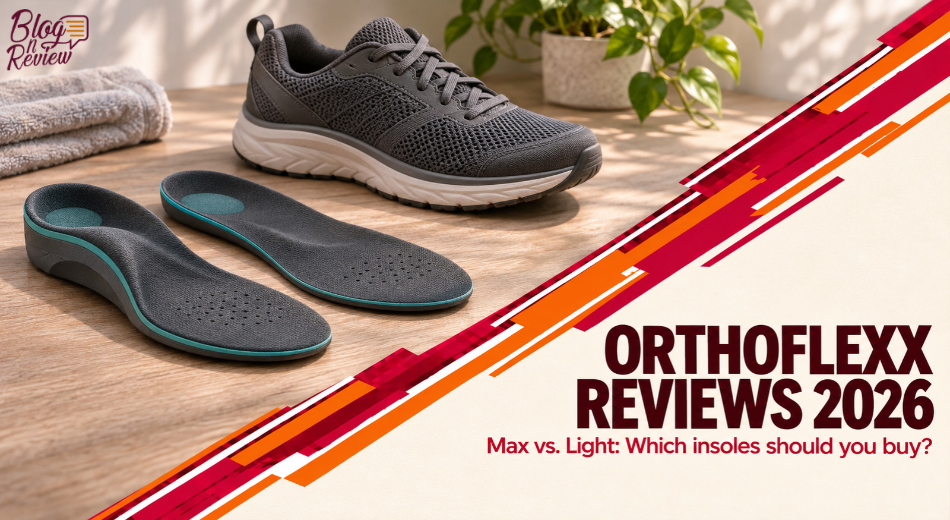
An insole can feel supportive when you try it on and take up too much room by the middle of a workday. That is the buying question behind most OrthoFlexx reviews. The brand sells a firm Max insert and a gentler Light insert, and the differences matter if your shoes already fit snugly or you have returned a pair because the arch pressed too hard. The best place to start is with the shoes you actually want to wear, especially if that means work boots or sneakers you spend hours in.
This OrthoFlexx insoles review compares the two designs, explains what the Achilles Cushions do, and looks at the terms that matter if you order online. It draws on published product specifications, the brand’s fit and refund guides, public customer feedback, and clinical guidance on plantar heel pain. The assessment is research-based. It focuses on what buyers can verify before purchase and what can only be judged once the insert is in their shoe.
OrthoFlexx at a Glance
Quick Verdict.
The Light is the better starting point for everyday comfort if firm arches have bothered you before. Consider the Max if you already prefer a pronounced, rigid arch and have a shoe with room for it. Try one pair first and confirm the return terms before ordering.
Compare Max and Light before you order
Check the official arch profiles and sizing guide against the shoes you wear most.
Compare OrthoFlexx Insoles →What Is OrthoFlexx?
OrthoFlexx is a direct-to-consumer insole brand whose website identifies the business as KloudStep LLC in Sheridan, Wyoming. Its main products are the Max Arch Support Insoles and Light Arch Support Insoles. Both are prefabricated inserts sold by shoe size. The company also lists an adhesive heel accessory called Achilles Cushions. The range is easy to understand once you separate the two decisions it asks you to make: how much arch structure you want underfoot and whether the back of your shoe needs a pad.
The distinction between an off-the-shelf orthotic and a device selected or made after a clinical assessment matters here. OrthoFlexx offers a standard shape that you can trim at the edges to match your shoe. Trimming changes the outline, so the arch still needs to line up with your foot. If you already wear a prescribed device, or your left and right feet have very different support needs, ask the clinician who fitted you before substituting a standard pair.
Key Features and Product Range
Max Arch Support Insoles
The Max is the firmest of the two models. OrthoFlexx lists an arch height of 1.38 inches (3.5 cm) and says the structure holds up to 330 lb (150 kg) without collapsing. That weight figure describes the manufacturer’s claim about the insert retaining its shape. It gives shoppers an idea of how the brand intends the Max to feel under load. Comfort over a shift, wear over months, and how the arch lines up with your foot are separate questions.
The Max makes the most sense on a shortlist if you already know how a pronounced arch feels and prefer that degree of contact to soft cushioning. A structured sneaker or boot with a removable liner gives you a practical place to test it. If another rigid insert previously pushed hard into one specific spot, the measurements alone are unlikely to tell you whether the Max will work. Arch shape and position matter as much as height when you put your full weight on the shoe.
Light Arch Support Insoles
OrthoFlexx lists a 1.1-inch (2.8 cm) arch on the Light and describes the design as softer and lower profile than the Max. The brand positions it for general comfort and tired feet. That makes it the more straightforward buying candidate if your goal is to change the feel of a pair of everyday sneakers, or if you tried a higher insert and found the pressure distracting. The Light still has a shaped arch, so shoppers who prefer an almost flat liner should factor that in.
Keep the word “Light” in context when comparing it with other brands. It describes the model’s place in the OrthoFlexx range. A shoe with a shallow toe box or snug lacing can still feel tight after you change the insert, even with a lower arch. The listed arch height also tells you little about how much room the whole insert occupies near the toes or heel. If shoe space is the main constraint, compare options explicitly designed for tight-fitting footwear.
Achilles Cushions
The Achilles Cushions are adhesive pads that stick inside the back of the shoe, where the heel can rub against the lining. They serve a different purpose from the arch inserts, which sit under the foot. A pad may be worth considering if a specific seam rubs in a shoe with enough space to accommodate it. In a shoe that is already snug at the back, the extra layer may simply make the fit feel tighter. Work out where the irritation comes from before adding both products at once.
The accessory name is easy to misread when you are searching for the cause of pain behind the heel. The brand describes these cushions in terms of contact with the shoe. If the pain persists away from the rubbing shoe, or is accompanied by symptoms in the ankle or calf, the NHS describes several possible causes that warrant a different approach. A painful snap or pop during an injury, especially with swelling or difficulty walking, calls for urgent assessment.
Design, Fit and Everyday Use
Start with one shoe and its original liner
OrthoFlexx’s guide recommends removing the original liner where possible and keeping it as a template. Place the new insert inside the shoe before trimming to see whether it lies flat. If it needs cutting, use the old liner for the outline and work in small increments. Make sure the new insert sits all the way back in the shoe and the front stays flat. Keep the original liners somewhere safe in case you want to restore the old fit or compare the inserts later.
Try the shoe indoors with the socks you normally wear. Walk around and check where your arch meets the raised part, whether your heel still sits securely, and whether you can move your toes. Then try both shoes, since a pair can fit differently from side to side. Small changes in how high the heel sits can affect whether the shoe feels secure, especially with a shallow heel collar. If the insert fits in a sneaker, repeat the fit check separately before moving it into a boot or another pair.
Give yourself time before a full shift
Use the brand’s break-in guide and start with short periods in a familiar pair of shoes. That gives you a chance to tell the difference between unfamiliar arch contact and a fit that presses or rubs in the same place each time. Avoid making your first trial a full work shift or a long trip where you cannot easily swap back. If you experience sharp pain, numbness, or persistent rubbing, stop using the inserts and reassess the fit. Seek professional advice for ongoing or worsening symptoms.
If you spend the day on your feet, check what actually changes when you wear the insert. You might like the sense of contact under the arch but find your toes feel crowded later, or prefer the extra structure in one pair and the original liner in another. Pay attention to which shoe you wore, how long you had it on, and where the discomfort appeared. Those observations are more useful for deciding whether to keep an insert than a broad promise about lasting through a shift.
Plantar fasciitis and flat feet
OrthoFlexx markets Max to people with plantar fasciitis and fallen arches. The 2023 clinical practice guideline on plantar heel pain advises against using prefabricated or custom orthoses on their own for short-term relief of plantar fasciitis. It allows them alongside other treatments to help reduce pain and improve function. That guidance concerns orthoses as a category. Shoppers looking for a clinical reason to choose Max over Light or another brand should know that this review did not identify an independent head-to-head study of the models.
If your feet are flat and comfortable, the NHS says treatment is usually unnecessary. If one foot has recently become flatter, or you have pain, weakness, numbness, or difficulty walking, seek an assessment. A generic “for flat feet” label gets you only as far as the product shelf. Some people shopping for arch support want very little underfoot contact, while others already know that a firmer shape works with their shoes. Use whatever you already know about fit, and involve a clinician when symptoms or a change in foot shape prompted the search.
Pricing and Value for Money
The brand’s U.S. storefront displayed $64.95 for Max and $49.95 for Light in the listings checked for this review. That puts the difference at $15 before any applicable taxes or promotions. Prices, bundle contents, and availability can vary by region and size, so confirm the amount and delivery estimate for your chosen pair. The official shipping policy advertises free shipping and provides destination-specific estimates. If you need the insert for a particular shift or trip, rely on the estimate for your location.
The refund policy gives you 30 days from delivery to return the insoles, including pairs that have been worn, trimmed, or washed. It says returns are free and asks customers to email their order number for instructions before sending anything back. If the company asks you to send back an order that included complimentary Achilles Cushions, the policy says to include those too. The stated deduction for missing cushions is $19.99. Orders of five or more pairs carry a return fee under the policy.
In practical terms, the trial is an important part of what you pay for. The option to return a trimmed pair gives you room to check fit in a real shoe. Start with one pair if you are new to the brand and keep any included pads and your order confirmation together. If the first pair works, a bundle might make sense for shoes with similar space and fit. Buying several up front makes more sense when you already know which model, size, and placement work for you.
Check the price for one pair
Select your size and review the checkout total before deciding whether a bundle makes sense.
See Current Prices →OrthoFlexx Pros and Cons
| Pros | Cons |
| Two models give shoppers a clear choice in arch firmness. | The Max’s pronounced shape may feel intrusive if you are sensitive to arch pressure. |
| Published arch heights make Max and Light easy to compare. | Arch height alone tells you little about full-shoe clearance. |
| The inserts can be trimmed to fit the outline of the shoe. | Trimming cannot move the molded arch forward or back. |
| Worn and trimmed pairs qualify for the stated return window. | Returns require advance contact, and larger orders can carry fees. |
| Adhesive heel cushions are available for shoe rubbing. | Adding pads can reduce space at the back of an already snug shoe. |
Who Should Buy OrthoFlexx?
Light suits someone who likes the shape of their current shoe but wants more arch contact from the liner and generally prefers softer support. Max is a stronger candidate for someone who has worn a structured insert before, likes a more pronounced arch, and is replacing an insert in shoes with enough room. If you are choosing between them for standing at work, factor in your footwear requirements. A structured insert is only useful if your work shoe still fits securely and comfortably with it inside.
| What you want | Where to start |
| Gentler arch contact for everyday shoes | OrthoFlexx Light |
| Firm, prominent support in roomy sneakers or boots | OrthoFlexx Max if you already tolerate a firm arch |
| Padding where the shoe lining rubs your heel | Assess shoe fit and consider Achilles Cushions if space allows |
| Advice for a newly flat foot or persistent heel pain | A clinician or podiatrist before choosing an insert |
Who Should Skip It or Get Advice First?
If the shoe you want to use already squeezes your toes or slips off your heel, deal with that fit problem before ordering a taller insert. Shoes with glued-in liners, narrow dress shoes, and shallow slip-ons give you less control over how much room the insert leaves. An accessory pad may suit a localized rubbing problem in some shoes, but it also occupies space. If you need a new shoe anyway, start with one that fits well and has a removable liner so you have options later.
Speak with a clinician before experimenting if you have reduced sensation in your feet, diabetes with foot pain, or ongoing symptoms that interfere with normal walking. The NHS also advises seeking help for heel pain that is severe, worsening, or keeps coming back. You can bring the shoe and any insert you already use to the assessment. That gives the clinician a concrete example of the fit and pressure you are experiencing.
Customer Feedback and Common Concerns
OrthoFlexx has customer feedback on its own site and a public Trustpilot profile. Read across both places if you want a picture of how the ordering and fitting experience varies. Public reviews discuss comfort, the adjustment to a firm insert, and interactions with customer support. For a practical comparison, look for reviewers who name the model, describe their type of shoe, and say how long they wore the insert. A review based on a first try tells you something different from one written after several shifts.
Read lower-rated entries specifically for details about fit, exchanges, or refunds, and compare the order dates and locations with your own likely situation. Those details help you weigh which reports are relevant to your purchase. Individual accounts of symptom changes can also reflect changes in shoes, activity or treatment, so use them as descriptions of personal experience. For policy questions, check the written policy instead of assuming someone else’s resolution will apply to your order.
How OrthoFlexx Compares With PowerStep and Superfeet
PowerStep Pinnacle Maxx is a sensible comparison if you like a structured insert but want to understand how the heel is supported. PowerStep lists a firm but flexible support shell and an angled heel platform. Superfeet All-Purpose Support Low Arch, formerly called Black, is advertised as thin with a low arch and firm cushioning for moderate to tight footwear. These are published design features. The way each contoured insert fits depends on where the arch sits in relation to your foot and how much room the host shoe offers.
| Model | Published design | What to check |
| OrthoFlexx Max | Firm support with a 1.38-inch arch | Arch placement, toe room, and comfort under load |
| OrthoFlexx Light | Softer support with a 1.1-inch arch | Whether the arch and overall profile suit your everyday shoe |
| PowerStep Pinnacle Maxx | Firm but flexible shell with an angled heel platform | How the heel sits and how the shoe feels with the added structure |
| Superfeet All-Purpose Support Low Arch | Thin profile, low arch, and firm cushioning | Arch position and enough heel clearance in close-fitting footwear |
A useful way to narrow the options is to identify which part of your existing setup bothers you most. For an arch that feels too high, compare Light with a low-arch model. For a shoe that already fits closely, prioritize thickness and heel clearance. If you enjoy firm arch contact and mostly wear roomy sneakers or boots, you can put Max and Pinnacle Maxx on the same shortlist and compare their fit guidance and return terms.
Frequently Asked Questions
What is the difference between OrthoFlexx Max and Light?
The Max is the firmer model and has a manufacturer-listed arch height of 1.38 inches. Light has a listed 1.1-inch arch and a softer, lower-profile design. If you already find strong arch contact uncomfortable, Light is the more sensible model to consider first.
Are OrthoFlexx insoles worth it for standing all day?
They may be worth trying if your work shoes have removable liners and you want more arch contact than the stock liners provide. Try a short wear period in your actual work shoes before committing to a shift. Check toe space and heel hold with the socks you normally wear.
Do OrthoFlexx insoles treat plantar fasciitis?
OrthoFlexx markets Max for shoppers with plantar fasciitis. Clinical guidance allows foot orthoses alongside other treatments and advises against using them alone for short-term pain relief. If heel pain persists or affects normal walking, a clinician can help identify the cause and discuss treatment options.
Which OrthoFlexx insoles are best for flat feet?
Comfortable flat feet usually need no treatment. If you want an insert for comfort and prefer gentler arch contact, start by comparing Light with other lower-profile options. If a foot has recently become flatter, or you have pain or weakness, get the change assessed before choosing an insert.
Can you trim OrthoFlexx insoles?
Yes. The brand recommends using your shoe’s original liner as a template if trimming is needed. Trim in small increments and check the fit as you go. The shape of the arch stays the same after you adjust the edges.
Can you wear OrthoFlexx insoles with work boots?
Some work boots have enough room, especially if the original liner lifts out. Check that the heel stays seated and that your toes still have room with your usual work socks. For safety footwear with specific requirements, confirm allowable changes with the footwear provider or employer.
What do OrthoFlexx Achilles Cushions do?
They stick inside the back of a shoe to pad the area where the lining can rub against your heel. Check whether the shoe has space for the extra layer. Persistent pain behind the heel or pain after an injury needs a different evaluation from shoe rubbing.
Can you return OrthoFlexx insoles after trying them?
The official policy says worn, trimmed, or washed insoles can be returned within 30 days of delivery. Contact support first for instructions. Check the terms for any included Achilles Cushions and the separate return fee for orders of five pairs or more.
Should I buy an OrthoFlexx bundle first?
A single pair gives you a chance to check arch placement, toe room, and whether you like the feel over several wears. A bundle makes more sense if you plan to use the same model in multiple shoes and have already checked that it fits those shoes. Review the bundle terms before committing.
Final Verdict: Is OrthoFlexx Worth It?
OrthoFlexx is worth considering if you want a shaped, off-the-shelf insole and can try it in a shoe with enough room. Start with Light if your main goal is everyday comfort and you dislike noticeably firm contact. Put Max on your shortlist if you know you like a pronounced arch and your shoes can accommodate it. The ability to return a worn or trimmed pair is a real buying advantage, provided you follow the refund instructions and keep any included accessories.
For shoppers mainly concerned with a painful heel or a change in foot shape, the purchase decision comes after understanding the cause. For everyone comparing inserts mainly on comfort, start with the pair of shoes you wear most and choose the model you are most likely to tolerate there. A single pair gives you a way to make that decision before spending on a bundle.
Find the right arch profile for your shoes
Review the Max and Light specs, then choose a size for the pair you wear most.
Visit OrthoFlexx →