AutoBrush Review 2026: Is the 30-Second U-Shaped Toothbrush Worth It?
-
September 02 , 2026
-
38
Quick Verdict
| Review category | Our assessment |
| Overall rating | 8.4/10 |
| Best for | People who struggle to brush consistently, users with limited dexterity, busy adults, and families trying to make brushing easier |
| Main advantages | 30-second cycle, full-mouth brush head, ADA accepted, replaceable head sizes, several cleaning modes |
| Main drawbacks | Expensive replacement heads, fit takes adjustment, less precise control than a standard electric brush |
| Short summary | AutoBrush is one of the few U-shaped toothbrushes with credible ADA acceptance behind it. Its speed and convenience are genuinely appealing, but correct sizing, movement and toothpaste distribution are essential. |
AutoBrush Review: Can a 30-Second Toothbrush Really Work?
Most electric toothbrushes ask you to spend two minutes moving a small brush head around your mouth. AutoBrush takes a completely different approach. Its U-shaped mouthpiece surrounds the upper and lower teeth simultaneously and attempts to clean every surface during a 30-second cycle. That promise is naturally appealing. Thirty seconds sounds more manageable for rushed mornings, reluctant children, people with attention difficulties and anyone who finds conventional brushing physically demanding.
It also raises an obvious question: can a mouthpiece toothbrush actually clean well, or is it another convenience gadget that sacrifices results for speed?
That skepticism is reasonable. Many inexpensive U-shaped toothbrushes use soft silicone nubs that barely contact the gumline. AutoBrush, however, should not automatically be grouped with those generic products. Its mouthpiece uses nylon bristles, requires active side-to-side movement and is listed by the American Dental Association as an accepted U-shaped toothbrush series. According to the ADA, its acceptance is based on findings that the product is safe and has demonstrated effectiveness in removing plaque and helping prevent or reduce gingivitis when used as directed. That is considerably more meaningful than a brand simply describing its own product as “dentist approved.” Still, AutoBrush is not completely hands-free, nor will it suit every mouth. This AutoBrush review examines how the system works, where it performs well, what customers dislike and whether it provides enough value to justify its higher ongoing cost.
Check Today's Price
What Is AutoBrush?
AutoBrush is an oral-care brand specializing in U-shaped automatic toothbrushes for adults and children. Its flagship system combines a rechargeable powered handle with a replaceable mouthpiece designed to contact multiple tooth surfaces simultaneously. The current adult product is generally presented as the AutoBrush Pro, although shoppers may still encounter “AutoBrush Sonic Pro” in older product listings, customer discussions and searches. Both names refer to the brand’s premium mouthpiece-style brushing concept rather than a conventional single-head sonic toothbrush. The company’s main proposition is simple: make effective brushing faster and easier to repeat consistently.
Instead of manually guiding a compact brush head over each tooth, users apply toothpaste to the mouthpiece, insert it, bite down gently and move the device from side to side. Thousands of bristles then vibrate against the front, back and biting surfaces during the timed cycle. The concept is particularly relevant for people who regularly cut a two-minute brushing session short. It may also help users with limited hand mobility because the technique requires less detailed wrist movement than a traditional toothbrush. AutoBrush markets products for adults, children and families. Its colorful design, short cycle and optional light features make the children’s versions especially relevant for parents dealing with brushing resistance. However, convenience is not the same as zero effort. The brush must fit properly, toothpaste needs to reach the bristles, and the user still needs to move the mouthpiece gently. Treating it like a passive tray can produce a less thorough result.
Key Features of the AutoBrush Pro
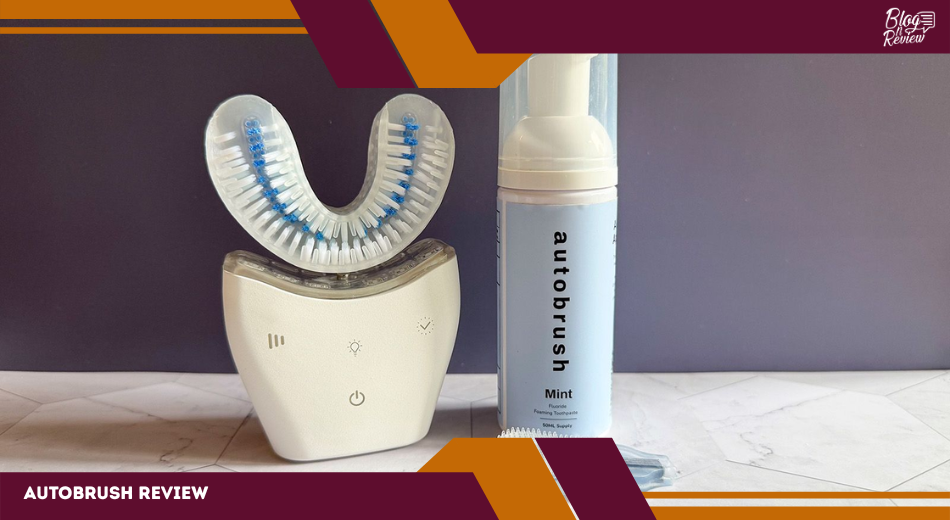
A full-mouth U-shaped brush head
The defining feature is the mouthpiece itself. It wraps around both dental arches and positions bristles against several surfaces at once. This design reduces the amount of manual navigation required. For someone who routinely misses sections of the mouth or becomes distracted before completing a full brushing session simultaneous coverage is a meaningful advantage. AutoBrush offers different mouthpiece sizes because dental arches vary. Choosing the right size is central to the experience. A head that is too large may feel uncomfortable or fail to sit correctly, while one that is too small may not reach the back teeth effectively. The company states that it will help replace an incorrectly sized head under its fit policy. That reduces the purchasing risk, but buyers should still consult the size guide before ordering.
Nylon bristles rather than basic silicone nubs
Many cheap automatic toothbrushes rely almost entirely on short silicone projections. These can feel gentle, but they may not make sufficient contact with the tooth surface. AutoBrush differentiates its design through densely arranged nylon bristles. The company says its patented head contains thousands of bristles positioned to reach the front, back, chewing surfaces and gumline. That distinction matters. A U-shaped appearance alone does not tell you whether a toothbrush can clean effectively. Bristle material, placement, motion and fit all affect plaque removal. The company instructs users to move the brush gently from side to side or in a figure-eight pattern. This helps the bristles sweep across tooth surfaces rather than vibrate in one fixed position.
A 30-second brushing cycle
AutoBrush’s headline benefit is its short cycle. The system aims to clean the full mouth in 30 seconds rather than the two minutes recommended for conventional brushing. Brand-hosted clinical information reports that AutoBrush has been evaluated against reference manual toothbrushes. The company cites results including up to 5.1 times better plaque removal and up to a 45% greater reduction in gingivitis in particular study conditions. Those figures should be read carefully. “Up to” results represent the strongest measured outcomes under controlled protocols, not a guaranteed improvement for every customer. Results in an ordinary bathroom will depend on head fit, movement, consistency and the user’s dental anatomy. The more independently useful point is the ADA Seal statement. The ADA confirms that the AutoBrush U-shaped series has shown efficacy for plaque removal and helping prevent and reduce gingivitis when used as directed.
Multiple cleaning modes
The handle offers different settings intended to accommodate daily cleaning, more intensive brushing, gum-focused use and whitening-oriented routines. Multiple modes can make the vibration easier to tolerate during the adjustment period. Someone with sensitive gums may prefer to begin with a gentler setting instead of immediately using the most powerful mode. Modes should not be confused with separate dental treatments. A whitening setting may help lift some surface staining through brushing action, but it will not reproduce the results of peroxide whitening or professional treatment.
Red and blue LED lights
AutoBrush incorporates LED illumination into its oral-care routine. The brand associates blue light with its whitening system and red light with gum-care support. These features add interest and can make the product feel more advanced, particularly for users motivated by visible technology. However, they should be considered secondary to the bristles, cleaning technique and daily consistency. The strongest reasons to buy AutoBrush remain speed, broad coverage and accessibility not the expectation that built-in lights will deliver dramatic cosmetic or therapeutic results.
Waterproof construction
The company describes the brush as IPX7 waterproof, allowing it to be rinsed under running water and used in the shower. It advises against leaving the unit submerged for extended periods. Water resistance is useful because mouthpiece toothbrushes require thorough cleaning. Saliva and toothpaste can collect between the many bristles, so the head should be rinsed carefully after every use and allowed to air-dry.
Compatible foam toothpaste
AutoBrush sells foam toothpaste designed to spread throughout the mouthpiece more evenly than a thick stripe of conventional paste. The foam format improves convenience, but customers are not strictly locked into it. The company says regular toothpaste can be used, although it recommends pre-foaming it or mixing it with a small amount of water so it distributes across the bristles. This flexibility is welcome because a proprietary toothpaste subscription increases ongoing cost. Users with sensitivity concerns or dentist-recommended toothpaste can potentially continue using their preferred product.
First Impressions and Setup
AutoBrush looks more like a piece of personal-care technology than a traditional toothbrush. The handle is substantial, while the transparent or colored mouthpiece gives the device a distinctive appearance. The product arrives with more of a learning curve than a Sonicare or Oral-B brush. With a conventional electric toothbrush, most people already understand the basic technique. AutoBrush requires users to reconsider toothpaste application, mouthpiece placement and brushing motion. Initial setup involves charging the handle, attaching the correct brush head and selecting a cleaning mode. Before brushing, toothpaste needs to be distributed across both sides of the mouthpiece. Applying one concentrated blob can leave certain areas without enough paste.
Once inserted, the mouthpiece should sit comfortably around the teeth without aggressive biting. During the cycle, it needs gentle lateral or figure-eight movement. The sensation can be intense at first because so many bristles vibrate simultaneously. Expect several sessions before the technique feels natural. People with strong gag reflexes or very sensitive gums may need longer to adjust. The first 30-second cycle can also feel surprisingly brief. Users accustomed to two-minute brushing may wonder whether they have done enough. The best measure is not the clock alone but how the teeth and gumline feel afterward—and what a dental professional observes at regular checkups.
AutoBrush Performance and Real-World Experience
Speed is its clearest advantage
AutoBrush solves a behavioral problem that more powerful conventional brushes do not: some people simply will not brush thoroughly for two minutes. A 30-second routine is much easier to complete during a rushed morning. If AutoBrush turns an inconsistent or hurried brusher into someone who cleans twice every day, its practical value may outweigh the theoretical advantages of a conventional brush used incorrectly. This is especially relevant for children, neurodivergent users and people with disabilities. Less time in the mouth and reduced hand movement can lower the barrier to maintaining a routine.
Coverage depends on fit
The mouthpiece can surround multiple surfaces, but it cannot adapt to every mouth as precisely as a small brush head controlled tooth by tooth. People with crowded teeth, unusual arch shapes or partially erupted back teeth may find that some bristles make better contact than others. Orthodontic appliances add another variable. AutoBrush says its soft nylon bristles can be used around braces and dental work, but users should confirm suitability with their dentist or orthodontist. Correct sizing makes a substantial difference. If the head does not reach the back molars or press gently against the gumline, convenience will not compensate for incomplete contact.
It is not genuinely hands-free
Marketing images can make U-shaped brushes appear effortless, but the AutoBrush technique includes active movement. The brand specifically advises moving it gently side to side or in a figure-eight motion. That is still easier than navigating an ordinary brush around every surface. Nevertheless, customers expecting to insert the mouthpiece, remain completely still and receive a flawless clean may be disappointed.
The post-brush feel is different
Conventional Sonicare and Oral-B brushes concentrate their action on a smaller area before moving to the next section. This can create a stronger polished sensation on individual teeth. AutoBrush distributes its cleaning action across the whole mouth at once. Some users report enjoying the fresh feeling and convenience, while others prefer the more targeted sensation of a standard electric toothbrush. Flossing or interdental cleaning is still necessary. No toothbrush reliably cleans tight spaces between teeth as thoroughly as floss, interdental brushes or another dentist-recommended method.
Sensitive users may need an adjustment period
A mouthpiece containing thousands of active bristles can initially feel bulky or overstimulating. Selecting a gentler mode and checking the head size may help. Discomfort, bleeding or persistent soreness should not simply be ignored. Stop using the device and consult a dental professional if symptoms continue. A toothbrush should support oral health, not create ongoing pain.
Cleaning the brush requires care
The large head contains far more bristles and channels than a conventional replacement head. It needs careful rinsing after use and should be stored where it can dry. For travel, the mouthpiece also occupies more space than an ordinary brush head. A protective case is useful because allowing the bristles to rub against toiletry-bag surfaces would be unhygienic.
AutoBrush Pricing and Value
AutoBrush is positioned as a premium oral-care system. Pricing changes frequently through sales, bundles and subscriptions. At the time of this update, the official store displayed the adult Pro brush around $75 during a promotion, against a higher regular price of approximately $121. Buyers should verify the checkout total because promotions can change without notice. Replacement heads represent the more important long-term cost. The official product pages showed brush-head options beginning around $25, with the exact price depending on quantity, size and subscription selection. AutoBrush also offers foam toothpaste and replacement subscriptions. Subscriptions can reduce friction and may extend warranty coverage, but they create recurring charges. Review the renewal frequency and cancellation terms before enrolling.
The company advertises free shipping on subscriptions and qualifying orders of $99 or more. Its policies also mention a lifetime warranty while a qualifying subscription remains active. The return policy provides a 30-day money-back period for brushes. Customers are expected to work with support to resolve fit or usage problems first, and return shipping is not covered. Subscription renewal products have a more restrictive seven-day window and generally need to remain unopened. Is the premium justified? It can be if the short cycle removes a genuine barrier to daily brushing. For someone already brushing correctly for two minutes with an ordinary electric toothbrush, AutoBrush is more of an alternative format than an essential upgrade.
Explore BRAND Collections
AutoBrush Pros and Cons
| Pros | Cons |
| ADA accepted for plaque removal and helping reduce gingivitis when used as directed | Higher initial and replacement cost than many conventional electric toothbrushes |
| Completes its standard cycle in 30 seconds | Correct mouthpiece sizing is essential |
| Nylon-bristle design is more credible than low-cost silicone U-brushes | Requires side-to-side movement, so it is not fully hands-free |
| Cleans multiple tooth surfaces simultaneously | Bulky sensation may not suit users with a strong gag reflex |
| Useful for reluctant or inconsistent brushers | Less precise control around individual crowded teeth |
| May assist people with limited hand dexterity | Foam toothpaste and replacement subscriptions increase ongoing expense |
| Several cleaning modes and IPX7 water resistance | Large mouthpiece takes more effort to rinse and dry |
| Regular toothpaste can be used | Does not replace flossing or professional dental care |
Who Should Buy AutoBrush?
AutoBrush makes the most sense for people whose main oral-care problem is consistency. If a two-minute brushing session feels unmanageable, a 30-second cycle can make twice-daily care easier to maintain. The system may also be valuable for users who cannot comfortably manipulate a small brush around every tooth. Parents may appreciate the shorter routine for children who resist brushing. The colorful design and unusual format can make the process more engaging, although supervision remains important. It is also one of the more credible choices for shoppers specifically seeking the best U-shaped toothbrush. ADA acceptance separates AutoBrush from generic mouthpiece brushes that may look similar but use different bristle materials and designs.
| Type of buyer | Recommendation |
| Frequently rushes or skips brushing | Strong match |
| Has limited wrist or hand mobility | Worth considering |
| Child strongly resists two-minute brushing | Potentially useful with supervision |
| Specifically wants an ADA-accepted U-shaped brush | One of the strongest options |
| Already brushes thoroughly with Sonicare or Oral-B | Optional rather than necessary |
| Has a strong gag reflex | Try cautiously under the return window |
Who Should Avoid It?
AutoBrush is less suitable for anyone who dislikes bulky items in the mouth. Even with the correct size, a full dental-arch mouthpiece feels very different from a compact toothbrush. Budget-conscious shoppers should also account for replacement heads rather than evaluating only the discounted handle price. A basic Oral-B or Sonicare brush can cost less upfront and use more widely available heads. People who enjoy methodically cleaning each tooth may prefer a conventional brush. A small rotating or sonic head provides more targeted control around crowded areas, wisdom teeth, implants and orthodontic appliances. Finally, users with active gum disease, recent oral surgery, persistent bleeding, painful sensitivity or complicated dental work should ask their dentist before changing their routine.
Customer Feedback Summary
Customer feedback is broadly positive but not uniform. On Trustpilot, AutoBrush held a 4.0 out of 5 TrustScore from 316 reviews when checked for this article. Positive themes included easier brushing routines, helpful support, replacement assistance and the usefulness of the system for customers who had struggled with conventional brushing.
Negative feedback included dissatisfaction with support response times, delivery issues, subscription misunderstandings and discomfort with the mouthpiece. Trustpilot itself notes that the company had not recently invited reviews, so the available sample may not represent the experience of every buyer.
These mixed experiences reinforce two practical points. First, sizing and comfort vary substantially between users. Second, buyers should read subscription and refund terms before checkout rather than relying only on promotional summaries. No customer-review platform can prove clinical effectiveness by itself. Customer comments are most useful for identifying recurring usability, fulfillment and service themes.
AutoBrush vs Sonicare vs Oral-B
The right comparison is not simply which motor is strongest. These brushes use fundamentally different cleaning methods.
| Feature | AutoBrush Pro | Philips Sonicare 4100 | Oral-B Pro 1000 |
| Brush style | Full-mouth U-shaped nylon head | Elongated sonic head | Small oscillating-rotating head |
| Typical routine | 30-second cycle | Two-minute timed cycle | Two-minute timed cycle |
| Manual guidance | Gentle side-to-side or figure-eight movement | Move section by section | Guide tooth by tooth |
| Pressure sensor | Not the primary focus | Yes | Yes |
| Best advantage | Speed and simultaneous coverage | Familiar, gentle sonic cleaning | Targeted cleaning and strong value |
| Main limitation | Fit and replacement-head cost | Still requires a full two-minute technique | Small head requires careful navigation |
| Best for | Inconsistent brushers and accessibility needs | Users wanting a traditional sonic brush | Value-conscious users wanting precise control |
AutoBrush vs Sonicare
In an AutoBrush vs Sonicare comparison, AutoBrush wins for speed. Its mouthpiece addresses several surfaces at once, while Sonicare requires users to move through different sections of the mouth. Sonicare offers more precise control and a familiar brushing experience. The 4100 includes a pressure sensor, SmarTimer and QuadPacer, helping users avoid excessive pressure and spend appropriate time in each section. Choose AutoBrush if time, dexterity or brushing resistance is the main obstacle. Choose Sonicare if you can commit to two minutes and value targeted control.
AutoBrush vs Oral-B
The Oral-B Pro 1000 uses a compact round head with oscillating, rotating and pulsating action. It includes a two-minute timer and a sensor that reduces pulsation when excessive pressure is applied. The official listed price was $49.99 when checked, making it less expensive than AutoBrush at regular pricing. Oral-B is better suited to shoppers who want to focus on one tooth at a time and purchase replacement heads through widely available retailers. AutoBrush remains more distinctive. Its value lies in making the routine shorter and reducing the fine hand movement required.
AutoBrush vs cheap U-shaped toothbrushes
This is the comparison where AutoBrush has the clearest advantage. Similar-looking marketplace products often use basic silicone mouthpieces and provide little reliable evidence about plaque removal. AutoBrush uses nylon bristles and has an active ADA Seal listing. That does not mean it will fit every user perfectly, but it does mean buyers should not assume a $20 look-alike provides an equivalent cleaning system.
Frequently Asked Questions
Is AutoBrush worth it?
AutoBrush is worth considering if speed, limited dexterity or difficulty maintaining a two-minute routine prevents consistent brushing. It offers less value for someone already using a conventional electric toothbrush correctly and consistently.
Does AutoBrush really clean teeth in 30 seconds?
The device runs a 30-second full-mouth cycle. The ADA states that the accepted AutoBrush U-shaped series has shown efficacy in removing plaque and helping prevent and reduce gingivitis when used as directed. Correct sizing and side-to-side movement remain essential.
Is AutoBrush ADA approved?
The technically correct phrase is ADA accepted, not government approved. The AutoBrush U-shaped toothbrush series appears in the ADA Seal of Acceptance product database.
Is AutoBrush Sonic Pro the same as AutoBrush Pro?
AutoBrush Sonic Pro is a name associated with the brand’s U-shaped powered toothbrush line, particularly in older listings and searches. Current adult product pages commonly use AutoBrush Pro. Check the included head and accessories rather than relying only on the name.
Does AutoBrush replace flossing?
No. AutoBrush cleans exposed tooth and gumline surfaces, but it does not eliminate the need for floss or another dentist-recommended interdental cleaner.
Can regular toothpaste be used with AutoBrush?
Yes. The company says conventional toothpaste can be used. Pre-foaming it or mixing it with a little water may help distribute it throughout the mouthpiece. AutoBrush’s foam toothpaste is convenient but not mandatory.
How often should the AutoBrush head be replaced?
Follow the manufacturer’s current replacement guidance and inspect the bristles regularly. Replace the head sooner if the bristles become worn, deformed or unhygienic.
Can children use AutoBrush?
AutoBrush sells child-specific options and sizes. Parents should choose the appropriate model, supervise brushing and follow age guidance. A child with dental or sensory needs may also benefit from advice from a pediatric dentist.
Is AutoBrush suitable for braces?
The company says it can be used around braces and other dental work. Because orthodontic cleaning needs vary, confirm the technique with an orthodontist and continue any additional interdental cleaning they recommend.
Does AutoBrush whiten teeth?
Brushing may reduce some external surface staining, and the system includes whitening-oriented features. It should not be expected to change the natural internal shade of teeth like professional or peroxide-based whitening treatment.
Does AutoBrush have a money-back guarantee?
The company offers a 30-day money-back policy on brushes, subject to its terms. Customers must contact support and may be asked to troubleshoot fit or technique first. Return shipping is not covered, and subscription renewals have different conditions.
Is AutoBrush better than Oral-B or Sonicare?
It is better for certain users, not universally better. AutoBrush prioritizes speed and broad simultaneous coverage. Oral-B and Sonicare provide more targeted control and have less dependence on mouthpiece fit.
Final Verdict: Is AutoBrush Worth It?
AutoBrush is not merely another inexpensive silicone U-brush. Its nylon-bristle design, active ADA acceptance and documented testing give it a much stronger foundation than most automatic toothbrushes sold online. Its greatest benefit is behavioral. A toothbrush cannot help if a person avoids using it, gives up after 20 seconds or cannot comfortably guide it around every tooth. AutoBrush makes the routine unusually short and reduces the hand movement required. The tradeoffs are equally clear. Mouthpiece fit matters, the sensation takes adjustment, replacement heads are expensive and the system still requires gentle movement. People who already brush thoroughly with a Sonicare or Oral-B should not expect an automatic transformation in oral health. AutoBrush is best for inconsistent brushers, busy users, people with limited dexterity and families trying to reduce resistance around brushing. Those with a strong gag reflex, complicated dental needs or a tight replacement-head budget should consider a conventional electric brush instead.
Shop BRAND Now
Leave a Reply
Your email address will not be published. Required fields are marked
Can I write you?
Sign up to get my weekly newsletter.