Ridge Wallet Review 2026: Are Ridge Wallets Really Worth the Premium?
-
September 02 , 2026
-
38
Quick Verdict
| Overall rating | 8.4/10 |
| Best for | Minimalists who carry mostly cards and want a durable, compact wallet with replaceable parts |
| Pros | Excellent construction; holds 1–12 cards; RFID-blocking plates; modular cash strap or money clip; replaceable elastic and screws; wide choice of materials and finishes; 99-day trial |
| Cons | Expensive for a card holder; individual cards take practice to access; metal edges can feel rigid; limited cash and receipt storage; premium finishes can scratch; some warranty replacements now carry processing fees |
| Short summary | Ridge is legitimate, thoughtfully engineered, and more durable than many low-cost clones. It earns its premium for buyers committed to minimalist carry, but traditional-wallet users may find it less comfortable and less convenient than the marketing suggests. |
Ridge Wallet Review:
The Ridge Wallet looks almost too simple to justify its price. Two rigid plates, an elastic retention system, a cash strap or money clip, and a few screws do not sound like a $95-plus product. That is why searches for “are Ridge wallets worth it?” remain common even though the brand is now one of the best-known names in minimalist everyday carry. The short answer is yes for the right person. Ridge delivers precise construction, compact dimensions, useful modularity, reliable card retention, and a more developed warranty and parts ecosystem than most imitation metal wallets. It is a genuine upgrade if your old bifold has become a storage drawer for unused cards and receipts.
It is not universally better than leather. The rigid form does not disappear against the body in the same way a soft wallet can. Accessing the card in the middle of a stack takes a learning period, bills must be folded, and carrying coins, receipts, hotel keys, or more than 12 cards defeats the purpose. This Ridge Wallet review examines the standard Ridge Wallet 2.0, Aluminum, Titanium, Carbon Fiber 3K, and Ridge Wallet for MagSafe. We will also compare Ridge Wallet vs Ekster, explain the current warranty rather than relying on outdated summaries, and identify who will genuinely enjoy living with one.
Check Today's Price
What Is the Ridge Wallet?
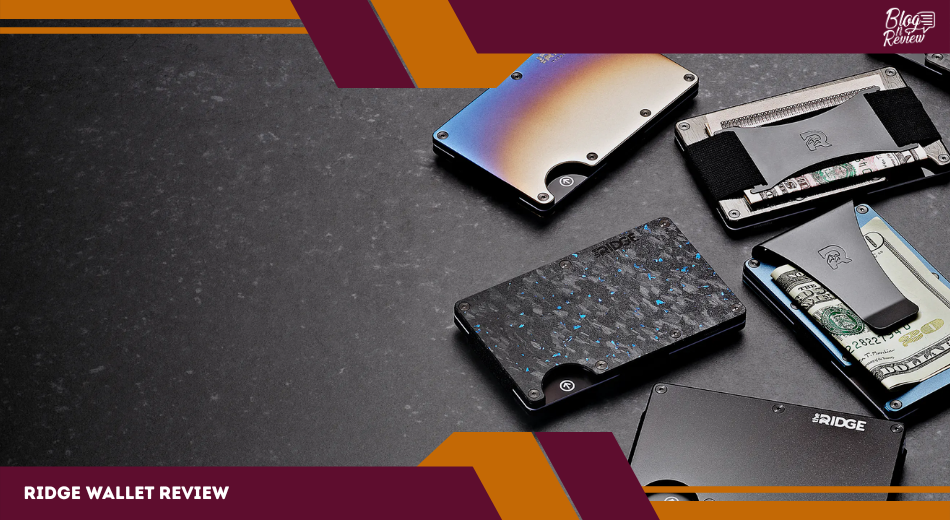
Ridge is an American everyday-carry brand built around a minimalist metal wallet. The company later expanded into key organizers, phone accessories, trackers, luggage, rings, bags, pens, and other gear, but the wallet remains its defining product. Instead of leather card slots, the Ridge uses two RFID-blocking outer plates connected by elastic. Cards sit in one compressed stack, while a thumb notch helps push them outward. Cash is secured externally with either an elastic strap or a spring-style money clip.
The current Ridge Wallet 2.0 keeps that recognizable format while refining the construction. Ridge says it is 10% lighter, uses a patented dual-track design, and improves modularity for swappable straps, clips, and attachments. Standard aluminum models are approximately credit-card sized at 86 × 54 × 6 mm and weigh about 2 ounces, though heavier materials such as brass vary.
Ridge is aimed at people who want to carry one to 12 cards in a front pocket without the folded bulk of a traditional bifold. Its key benefits are durability, compactness, RFID protection, and repairability. The last point matters: elastic, screws, straps, and clips can be replaced rather than forcing the owner to discard the whole wallet.
Ridge Wallet Models and Materials
Ridge Aluminum Wallet
The aluminum wallet is the sensible entry point. Selected current models use 6061-T6 aluminum with anodized, powder-coated, ceramic-coated, or printed finishes. It weighs around 2 ounces and offers the complete Ridge experience without the higher price of titanium or carbon fiber. Aluminum is best for first-time buyers who want the design rather than a luxury material story. It is sufficiently strong for ordinary pocket carry, although surface marks remain possible. Matte and textured finishes tend to disguise daily wear better than highly polished or visually uniform colors.
Ridge Titanium Wallet
Titanium versions add a denser, more premium feel and distinct finishes such as Burnt Titanium. It is strong and corrosion-resistant, but coatings and finished surfaces can still show wear. Choose titanium if material feel, appearance, and long-term ownership satisfaction justify the price. Functionally, it still holds cards in essentially the same way as the less expensive aluminum version.
Ridge Carbon Fiber Wallet
A Ridge carbon fiber wallet review must separate practical advantages from appearance. Carbon Fiber 3K provides a recognizable woven pattern and a lighter material feel than many metal configurations. It suits buyers who want a technical aesthetic and a premium material without the cold, dense feel of some metals. The wallet is still rigid, however, and the upgrade does not transform card access. Pay for carbon fiber because you appreciate the weight and weave—not because you expect a radically different mechanism.
Ridge Wallet for MagSafe
The MagSafe model combines Ridge’s plate wallet with embedded magnetic arrays, allowing it to attach to compatible iPhones and cases. An optional strengthening tray can improve compatibility with other devices. Ridge notes that the MagSafe wallet is not compatible with its QuickDraw Card Holder. It is designed for buyers who want Ridge-style organization attached to a phone. That is convenient, but a fuller wallet adds handset weight and combines two valuables in one object.
Key Features
One-to-12-card capacity
Ridge’s elastic system expands to hold between one and 12 cards. The important benefit is that the wallet does not require every slot to be filled: retention remains secure with a small stack, while additional cards increase thickness mainly at the center. Twelve is a technical maximum, not necessarily the comfort ideal. Six to eight flat cards provide a better balance of capacity and access. Embossed cards, metal cards, paper insurance cards, and laminated IDs consume more space and can make the stack harder to fan.
RFID-blocking plates
The outer plates block contactless RFID signals, helping prevent unauthorized scanning of compatible cards while they are inside the wallet. This is a useful security layer, especially for commuters and frequent travelers. RFID blocking does not protect against every form of payment fraud, and it can make transit or access cards inconvenient if you normally tap through a closed wallet. Those cards must be removed or carried outside the shielded stack.
Cash strap or money clip
The cash strap keeps the exterior relatively flat and is generally the better choice for a few folded bills. The money clip gives more familiar mechanical tension and may feel faster to load, but it creates a harder raised point on the outside. Neither option replaces a proper bill compartment. US notes must be folded, and larger currencies may require additional folds. Frequent cash users should consider a leather bifold, money clip wallet, or Ekster-style alternative instead.
Replaceable components
Ridge wallets are assembled with screws, elastic, plates, and a removable cash system. Replaceability gives the design a credible longevity advantage over cheap sealed card holders. If the elastic weakens or a fastener is lost, the failure does not automatically end the wallet’s useful life. Modularity also supports AirTag attachments and other accessories, although every add-on increases thickness and total cost. The cleanest Ridge experience is often the simplest one.
Built for Life warranty and 99-day trial
Ridge promotes a 99-day risk-free trial, which is especially valuable because the wallet feels different from leather. Confirm that your order and its condition satisfy the current return rules before assuming a no-questions-asked refund. The warranty deserves careful wording. Products purchased on or after October 14, 2025 through Ridge or authorized sellers fall under the current Built for Life program. Defective wallet parts are covered without a parts fee. Full wallet replacement for eligible loss, theft, normal wear, or accidental damage carries a processing fee—currently listed as $17.95 for wallets below $150 and $27.95 for wallets at or above $150—and is limited to two such replacements. Terms can change, so check the policy at purchase and claim time.
First Impressions
The wallet itself makes a strong first impression. Machining is neat, the plates align precisely, and the elastic feels purposeful. The form is shorter and flatter than an overfilled bifold, yet the hard rectangular shape is more noticeable than leather when squeezed in a back pocket. There is no technical setup, but there is a sensible transition process. Start with the cards you used during the previous month, place the two most frequently used cards on the outside of the stack, and leave loyalty cards in a phone wallet. Fold a small number of bills under the strap or clip. This exercise is part of the product: Ridge works by changing what you carry, not by compressing a traditional wallet’s entire contents into metal plates. Initial card access can feel awkward. Pushing the stack out, spreading it, and selecting a middle card becomes easier with repetition, but it never matches a labeled leather slot or Ekster’s push-button presentation.
Real-World Performance
Pocket comfort
In a front pocket, Ridge occupies very little area and avoids the uneven bulge of a bifold. The flat geometry works particularly well with jeans, work pants, or a jacket pocket. Users who already front-carry a slim wallet usually adapt quickly. The rigid corners are the compromise. Tight trousers can press the wallet against the leg, and a back pocket is not ideal for sitting. The metal exterior can also scratch a phone or other objects stored in the same pocket. Give it a dedicated pocket whenever possible.
Card retention and access
Retention is one of the strongest aspects. With an appropriate card stack and healthy elastic, cards feel secure without a mechanical latch. The exterior cards are fast to reach. The center cards require pushing the stack out and fanning or separating it. Owners develop different techniques, but the basic limitation remains. If you use one payment card and one ID, it is hardly a problem. If every purchase involves finding a different loyalty, expense, or access card, the friction becomes more noticeable.
Durability and finish wear
The structure handles ordinary drops and compression well, while replaceable elastic and fasteners extend its serviceable life. Some long-term owners praise its toughness; others report loose screws, stretched elastic, or component failures. Periodic inspection is prudent. Scratches and edge wear are normal rather than evidence of counterfeit quality. Coated aluminum may show marks differently from raw titanium or woven carbon fiber. Buyers who want a pristine object should choose a finish that masks wear or accept that everyday-carry gear develops patina.
Cash and receipts
Ridge is acceptable for emergency bills and poor for paper-heavy life. The strap or clip handles a small folded stack, but receipts become untidy and increase bulk. Coins have nowhere to go. Anyone who regularly receives cash change will need a second solution.
RFID and travel
The protected stack is reassuring during travel, while the small footprint reduces pocket bulk. On the other hand, hotel key cards and transit passes can become inconvenient when buried in the middle. Keep the card needed repeatedly on the outside, but remember it may still need to be removed to function through the blocking plates.
Ridge Wallet Pricing and Value
At the time of research, the standard aluminum Ridge Wallet started around $95 in the US, while limited finishes, carbon fiber, titanium, leather-covered, MagSafe, and precious-metal models could cost considerably more. Promotions regularly alter the effective price, so compare the checkout total rather than relying on a crossed-out reference price. The $95 aluminum model offers the clearest value. It provides the same core capacity, RFID shielding, modularity, and repairable construction as costlier variations. Carbon Fiber 3K has recently appeared near $99 during promotions against a higher regular price, making it attractive when the sale gap is small. Titanium becomes an emotional purchase: it feels special, but it does not make a middle card dramatically easier to retrieve.
Ridge costs far more than generic metal wallets. The premium buys finish consistency, established support, replacement parts, accessory compatibility, a long trial, and warranty infrastructure. A $95 wallet carried for five years can be sensible value; one abandoned after two weeks because it feels rigid is not. Compared with Ekster, Ridge emphasizes rugged simplicity and replaceable basic components. Ekster’s pop-up mechanism provides faster card presentation and leather options can feel more conventional, but mechanical complexity introduces another potential failure point. Budget minimalist wallets compete aggressively on price but rarely match Ridge’s ecosystem or policy coverage. The premium is justified for someone who likes the format, uses a wallet daily, and values repairability. It is not justified merely for the logo or RFID blocking, which is available much more cheaply elsewhere.
Explore BRAND Collections
Pros and Cons
| Pros | Cons |
| Precise, durable construction | Premium price for a simple mechanism |
| Holds 1–12 cards securely | Middle cards take practice to access |
| Slim front-pocket footprint | Rigid edges can feel uncomfortable in tight pants |
| RFID-blocking plates | Tap-to-pay transit cards must usually be removed |
| Cash strap and money clip choices | Poor for frequent cash, coins, and receipts |
| Replaceable elastic, screws, and accessories | Smooth or coated finishes can show wear |
| 99-day risk-free trial | Current full replacements may require processing fees |
| Numerous materials, colors, and engravings | Accessories quickly increase cost and bulk |
Who Should Buy Ridge?
Ridge is best for a card-first minimalist carrying roughly four to eight cards, a few folded bills, and little else. It suits front-pocket carry, travel, everyday-carry enthusiasts, and gift buyers who want a product that feels more substantial than a fabric card sleeve. The Carbon Fiber 3K version is a strong choice for buyers who value low weight and a technical appearance. Titanium appeals to those who enjoy premium metals. The MagSafe wallet makes sense for an iPhone user who consciously wants phone and wallet combined and accepts the added handset bulk.
| Buyer | Recommendation |
| Carries 4–8 cards and little cash | Excellent fit |
| Wants durable front-pocket EDC | Excellent fit |
| Likes carbon fiber or titanium | Good fit if the material is worth the premium |
| Wants wallet attached to an iPhone | Consider Ridge for MagSafe |
| Needs instant access to several cards | Compare Ekster first |
| Carries receipts, coins, or many bills | Choose a traditional wallet |
Who Should Avoid It?
Avoid Ridge if you enjoy the softness, organization, and aging character of leather. A metal plate wallet is intentionally rigid and industrial. It will not provide separate slots for family photographs, business cards, receipts, and currencies. It is also a weak match for anyone carrying more than 12 cards or several embossed cards. Technically forcing everything into the elastic defeats the slim design and slows access. A person who changes payment cards constantly may prefer Ekster’s ejection mechanism or a conventional card-slot layout. Finally, skip the premium materials if price is already uncomfortable. Aluminum delivers the essential experience. Carbon fiber, titanium, and special editions enhance feel and appearance more than function.
Customer Feedback Summary
The broad pattern in Ridge wallet reviews is positive, with durability, compactness, finish quality, and the encouragement to carry less appearing repeatedly. Independent editorial coverage has also been favorable; WIRED rated the wallet 8/10 in an April 2026 review, praising durability, customization, construction, and eventual usability while noting that minimalist design leaves limited room for everyday extras. Positive owners often describe years of use, reliable card retention, and satisfaction with warranty parts. Many appreciate that the wallet remains the same basic size whether it contains a few cards or a moderate stack.
Negative themes are consistent rather than mysterious. Some users dislike the rigid feel, find center cards frustrating to extract, scratch other pocket items, or decide the product is overpriced compared with clones. Complaints also mention loose screws, aging elastic, shipping delays, or slow support resolution. These reports do not establish that every wallet fails, but they identify the components and service points buyers should monitor. That split reinforces our main conclusion: satisfaction depends less on whether the wallet is “legit” and more on whether the plate-wallet format fits the owner’s habits.
Ridge Wallet vs Ekster and Other Competitors
| Wallet | Best for | Card access | Capacity | Main strength | Main drawback |
| Ridge Wallet 2.0 | Rugged minimal carry | Push and manually fan | 1–12 cards | Durable, modular, simple construction | Center-card access requires practice |
| Ridge Wallet for MagSafe | Combining phone and card carry | Push and manually fan | Check exact model | Strong magnetic integration with Ridge format | Adds phone bulk and concentrates loss risk |
| Ekster Cardholder | Fast card presentation | Push-button ejection | Core mechanism plus exterior storage; model-dependent | Quick, satisfying access | More mechanical complexity |
| Secrid Cardprotector/Wallet | Compact European-style organization | Lever ejection | Model-dependent | Proven protected card mechanism | Less suited to many loose cards or bills |
| Traditional leather bifold | Cash and organized storage | Dedicated slots | Usually higher | Comfortable, familiar, flexible | Bulkier and less protective against bending |
| Generic plate wallet | Lowest-cost Ridge-like format | Push and fan | Varies | Similar concept for much less | Uncertain tolerances, parts, support, and warranty |
Ridge Wallet vs Ekster
Ridge vs Ekster is primarily a choice between rugged simplicity and fast access. Ridge has no button mechanism: fewer moving parts, but more finger work. Ekster presents several cards through a trigger, which is faster at checkout and feels more familiar to people who dislike pulling out a complete stack. Ridge generally communicates a more tactical, industrial aesthetic. Ekster offers polished metal and leather-forward designs that can look more like a conventional premium wallet. Ridge officially states capacity up to 12 cards; Ekster capacity varies by product and how cards are divided between the mechanism and external storage. Choose Ridge for durability, modular parts, and direct control over a larger stack. Choose Ekster for speed and a softer transition from a traditional wallet. Neither is automatically superior.
Frequently Asked Questions
Is Ridge Wallet legit?
Yes. Ridge is an established everyday-carry company with official retail channels, extensive customer history, published policies, replacement parts, and mainstream editorial coverage. Counterfeit Ridge products can exist, so buy from Ridge or an authorized seller.
Are Ridge wallets worth it?
They are worth it for buyers who carry mostly cards, appreciate durable materials, and will use the wallet for years. They are not good value for someone who needs cash storage, instant access to many cards, or the flexibility of leather.
How many cards does a Ridge Wallet hold?
The current standard Ridge design is advertised for one to 12 cards. Six to eight conventional cards usually provide easier access than a completely full stack.
Does Ridge Wallet block RFID?
Yes. Ridge uses RFID-blocking plates designed to shield contactless cards inside the wallet. Cards normally need to be removed for contactless payment, transit, or building access.
Is the Ridge Carbon Fiber Wallet worth it?
Carbon Fiber 3K is worthwhile if you prefer its woven appearance and lower-weight material feel, particularly during a strong promotion. It does not change the basic card-access mechanism, so aluminum remains the better functional value.
Is the Ridge MagSafe Wallet secure?
It uses embedded magnetic arrays designed for a stronger hold on compatible phones and cases. Security depends on device compatibility, case thickness, loading, and use. Test the attachment during the return period and avoid treating magnetic connection as loss-proof.
What is the difference between Ridge Wallet and Ekster?
Ridge uses elastic tension between rigid plates and requires cards to be pushed and fanned manually. Ekster’s popular cardholders use a button-operated ejection mechanism. Ridge favors simple ruggedness; Ekster favors fast access.
Does Ridge offer a lifetime warranty?
Ridge’s current Built for Life program covers eligible products and circumstances. Defective wallet parts can be replaced free, while eligible full replacements for loss, theft, normal wear, or accidental damage currently involve a processing fee and limits. Check the current policy for purchase-date rules.
Can Ridge Wallet screws come loose?
Any small fastener can loosen over time. Inspect the wallet periodically and use the correct tool when tightening. Avoid over-tightening, which can damage screws or threads. Replacement hardware is part of Ridge’s support ecosystem.
Is a money clip or cash strap better?
The cash strap is flatter and works well for a few folded bills. The money clip loads quickly and offers firm mechanical pressure but adds a rigid raised section. Most dedicated minimalists will prefer the strap.
Will a Ridge Wallet scratch my cards or phone?
Normal card-edge wear is possible in any tightly packed wallet, while the rigid exterior can scratch a phone kept in the same pocket. Keep the wallet separate from delicate devices and avoid inserting dirty or gritty cards.
Can I return a Ridge Wallet if I dislike it?
Ridge advertises a 99-day risk-free trial on current wallet listings. Return eligibility can depend on purchase channel, condition, personalization, and current regional terms, so confirm the policy tied to your order.
Final Verdict
Ridge has not reinvented storage so much as turned carrying less into a durable system. The wallet is precisely made, compact, secure, modular, and supported better than most inexpensive copies. Those strengths make it one of the safest premium choices in the plate-wallet category. Its limitations are fundamental. A rigid stack is not as comfortable as leather for everyone, the middle card takes effort to access, and cash storage feels added rather than integrated. No premium material removes those trade-offs.
The best buy for most people is the standard aluminum Ridge Wallet, especially during a legitimate promotion. Carbon Fiber 3K is appealing when priced close to aluminum. Titanium and limited editions are for buyers who value material character and design enough to pay for it. The MagSafe version is compelling for a narrower group that actively wants phone-and-wallet consolidation. Our final rating is 8.4/10. Ridge is best for disciplined card-first minimalists and durable-gear enthusiasts. Cash-heavy users, receipt collectors, and shoppers prioritizing one-touch access should skip it or compare Ekster and traditional leather alternatives first.
Shop BRAND Now
Leave a Reply
Your email address will not be published. Required fields are marked
Can I write you?
Sign up to get my weekly newsletter.