Pecron Review 2026: Are Its Budget Power Stations Worth Buying?
-
September 03 , 2026
-
38
Quick Verdict
| Review factor | Verdict |
| Overall rating | 8.1/10 |
| Best for | Value-focused shoppers needing high-capacity backup power, RV energy or an expandable solar generator |
| Pros | Strong capacity-to-price ratio, LiFePO4 batteries, expandable storage, substantial solar input and powerful inverters |
| Cons | Heavy units, less polished software, model-dependent connector arrangements and a smaller service network than category leaders |
| Short summary | Pecron offers unusually high capacity and output for the money. It is compelling for technically comfortable buyers, but EcoFlow, Bluetti and Anker generally provide more polished ownership experiences. |
Pecron Review 2026
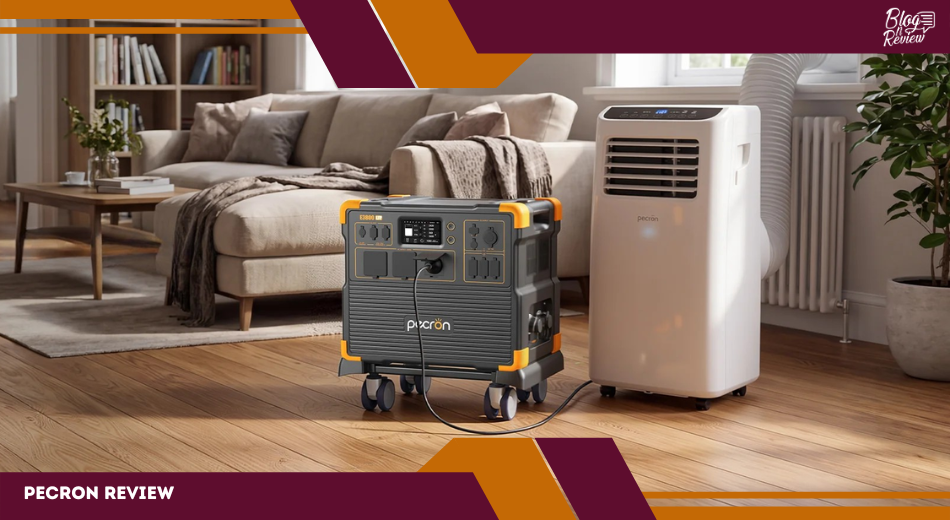
Portable power stations have become significantly more capable, but prices can still climb quickly when you need enough energy to run a refrigerator, microwave, power tools or RV appliances. That is where Pecron attracts attention. The company routinely sells high-capacity LiFePO4 power stations for considerably less than comparable products from larger brands. Its E3600LFP, for example, combines a 3,072Wh battery with 3,600W of continuous AC output and substantial expansion capability. On specifications alone, it looks almost too inexpensive.
Naturally, that creates several questions. Is Pecron legit? Are its advertised specifications realistic? Does the lower price mean accepting unreliable hardware or poor customer support? And how does it compare with Bluetti, EcoFlow, Anker and Jackery?
This Pecron review examines the company’s most searched models, including the E3600LFP, E2000LFP and E1500LFP. We will look at charging, output, battery longevity, portability, solar performance, warranty coverage and the compromises behind the aggressive prices.
The short answer is that Pecron is a legitimate brand with some excellent-value products. Its hardware proposition is often stronger than its software and retail-support experience, however. Choosing it makes the most sense when capacity and output matter more than having the slickest app or broadest local service network.
Check Today's Price
What Is Pecron?
Pecron is a portable-power company selling rechargeable power stations, expansion batteries, solar panels and complete solar-generator kits. Its products cover several use cases. Smaller units suit camping, electronics and brief outages, while larger models can support RV equipment, appliances, workshops and extended emergency power. Some systems can be expanded with external batteries, allowing owners to start with a manageable capacity and add more storage later. Pecron’s defining strategy is value. Instead of competing primarily through lifestyle branding or highly polished mobile software, it emphasizes battery capacity, inverter output, solar input and expandable storage. That approach particularly benefits buyers who understand watt-hours, charging limits and appliance loads. Someone who simply wants a small, effortless power bank may find Pecron unnecessarily technical. A buyer building a serious home-backup or off-grid system may see considerable value.
Pecron Power Station Comparison
| Model | Battery capacity | AC output | Best use |
| Pecron E1500LFP | 1,536Wh | 2,200W | Camping, shorter outages and medium appliance loads |
| Pecron E2000LFP | 1,920Wh | Model-dependent; verify current listing | RV use and extended backup |
| Pecron E3600LFP | 3,072Wh | 3,600W | Home backup, large RV loads and power tools |
| Pecron E3800LFP | 3,840Wh | 4,200W | Higher-capacity backup and demanding appliances |
| Pecron F5000LFP | 5,120Wh | Up to 7,200W | Large backup systems and 120V/240V requirements |
The E3600LFP is currently the most persuasive balance of output, storage and sale price. The E1500LFP is easier to accommodate for buyers who do not require more than 3kWh, while the larger E3800LFP and F5000LFP compete more directly with whole-home backup systems.
Key Features
LiFePO4 Battery Chemistry
Pecron’s modern LFP models use lithium iron phosphate cells. LiFePO4 batteries are popular in current power stations because they offer better cycle longevity and thermal stability than older nickel-manganese-cobalt designs. Pecron rates several models, including the E3600LFP and E1500LFP, for more than 3,500 cycles before reaching approximately 80% of their original capacity. That does not mean the battery stops working after cycle 3,500. It means its usable capacity will gradually decline. For occasional emergency use, that rating potentially represents many years of service. Even with regular cycling in an RV or off-grid setup, it should substantially outlast older battery technology.
High-Capacity Pure Sine Wave Inverters
Battery capacity tells you how long a power station can run equipment. Inverter output determines what it can run at one time. The E3600LFP supplies up to 3,600W of continuous AC output with a stated 7,000W surge capability. That gives it enough headroom for demanding appliances such as refrigerators, microwaves, coffee makers, induction cooktops and many power tools, provided the combined load stays within its limits. The E1500LFP offers 2,200W of continuous output and a 4,400W peak rating. This is sufficient for most camping and emergency appliances, although running several high-draw devices simultaneously can still exceed the inverter. Pure sine wave output is important for sensitive electronics and motor-driven equipment. It more closely resembles normal household electricity than the rough waveform produced by inexpensive modified-sine-wave inverters.
Expandable Battery Capacity
Expansion is one of Pecron’s biggest strengths. The E3600LFP starts with 3,072Wh and can connect to compatible EP3800-48V expansion batteries. Pecron says a fully expanded system can reach 18,432Wh. That is enough storage to move the product beyond occasional camping and into extended backup territory. The E1500LFP can also work with expansion batteries, with Pecron advertising configurations reaching up to 7,680Wh. Expansion benefits shoppers who do not want to pay for maximum capacity immediately. You can purchase the main power station, evaluate your actual energy consumption and add storage later. There are two caveats. Expansion batteries are heavy, and they create additional cables and equipment to store. Compatibility also varies, so confirm that the battery, connection cable and main unit are designed to work together.
Fast AC Charging
The E3600LFP supports unusually fast mains charging for a unit of its capacity. With the appropriate 30A charging cable and circuit, Pecron advertises input up to 3,200W and a charging time of approximately 1.3 hours. A conventional 15A connection supports a lower 1,800W rate, with the company advertising roughly 1.8 hours for a complete recharge. Fast charging is valuable during an outage when grid power returns briefly or when preparing for a trip at short notice. The ability to customize charging speed is equally useful. Slower charging can reduce strain on a shared circuit and keep fan noise lower. Before using a high-amperage charging cable, confirm that the outlet and circuit are properly rated. A 30A input should never be treated like an ordinary household plug.
Solar Charging
A power station becomes a solar generator when paired with compatible photovoltaic panels. The E3600LFP supports up to 2,400W of solar input through two high-voltage input ports. That is a substantial solar ceiling. Under excellent conditions, a sufficiently large array can restore a meaningful amount of energy in one day. Real-world solar performance depends on panel orientation, cloud cover, temperature, cable loss and the number of peak-sun hours available. A “300W” panel rarely sends exactly 300W into the battery throughout the day. The E3600LFP’s broad 32V–150V input range provides flexibility, but buyers must calculate array voltage carefully. Connecting panels above the permitted open-circuit voltage can damage the power station. Pecron sells bundled solar-generator kits, which simplify compatibility. Third-party panels may also work when their voltage, current and connectors fall within the station’s input requirements.
Multiple Output Ports
The E3600LFP provides numerous AC and DC connections, allowing it to run household appliances alongside phones, laptops, lights and vehicle-style accessories. Its 30A AC output is particularly useful for RV owners or backup installations needing more than conventional 15A receptacles. USB-C ports reduce the need for separate laptop chargers, while regulated DC outputs can power compatible 12V equipment more efficiently than converting battery energy to AC and back. Port quantity is helpful, but the total inverter and DC limits still apply. Six devices plugged in at once do not receive unlimited power.
App and Remote Control
Selected Pecron models support Wi-Fi and app-based monitoring. The app can provide access to battery status, input and output data, charging controls and remote operation. This functionality is useful when the power station is installed in an RV compartment, garage or backup area. Software is not Pecron’s strongest competitive advantage, however. EcoFlow and Anker generally offer more refined apps, clearer automation and more polished firmware experiences. Buyers should view Pecron’s app as helpful supplementary control rather than the main reason to choose the system.
UPS Functionality
Compatible Pecron units can automatically provide power when grid electricity fails. This can help keep networking equipment, computers, refrigeration or other essential electronics operating through short interruptions. A portable power station is not always equivalent to a dedicated online uninterruptible power supply. Transfer time, grounding behavior and appliance compatibility matter. Sensitive servers or medical equipment should use a purpose-designed system unless the manufacturer explicitly confirms compatibility.
First Impressions
Pecron’s larger products look more industrial than lifestyle-oriented. The housings are functional, with substantial handles, visible ventilation and clearly grouped ports. The E3600LFP weighs about 79 pounds, or roughly 36 kilograms. Calling it “portable” is technically accurate because it can be moved, but it is not something most people will casually carry across a campsite. A trolley or wheeled cart makes much more sense for regular transport. Buyers should decide where the unit will normally live before ordering. Initial setup is straightforward. Charge the unit, review the manual, inspect the connections and test it with smaller loads before relying on it during an emergency. App-supported models also require pairing with a phone and network. The display communicates battery level, charging input and current output. As with many power stations, the remaining-runtime estimate becomes more accurate once the load stabilizes.
Performance and Real-World Experience
Usable Capacity
A 3,072Wh battery does not deliver the entire 3,072Wh through an AC outlet. Some energy is consumed by the inverter, battery-management system, display and cooling fans. Under moderate AC loads, buyers should generally expect usable output to be lower than the nameplate capacity. The exact result changes with load size, temperature and whether power is drawn through AC, USB or DC outputs. For rough planning, a 100W device theoretically runs for about 30 hours on 3,072Wh. After normal conversion losses and background consumption, the real duration will be shorter. High-draw appliances also cycle on and off. A refrigerator rated at several hundred watts does not necessarily consume that continuously, while an electric heater usually does.
High-Load Performance
The E3600LFP’s 3,600W inverter makes it considerably more useful than a basic camping battery. It can operate equipment that smaller stations cannot start, particularly devices with compressor or motor surges. Its generous inverter also reduces the need to micromanage every small load. You still need to calculate simultaneous consumption, but there is enough headroom for a practical combination of appliances. Cooling fans become audible during fast charging and demanding output. That is normal for high-power electronics, although it makes the unit less suitable beside a bed or in an otherwise quiet room.
Solar Performance
With a correctly designed array, Pecron’s solar capability is excellent for the price. The 2,400W maximum on the E3600LFP is much higher than the input provided by many similarly priced systems. The challenge is designing the array. Buyers need to understand series and parallel connections, operating voltage, open-circuit voltage and cold-weather voltage increase. Those who want a completely plug-and-play experience should choose a Pecron kit or ask the company to confirm compatibility in writing before purchasing third-party panels.
Home Backup
The E3600LFP can cover important household loads during an outage, but it is not automatically a whole-home generator. It works well for selected appliances connected directly to the station or through an appropriately designed backup arrangement. Running central air conditioning, electric water heating and every household circuit simultaneously requires a larger 120V/240V system. Pecron states that two E3600LFP units can be paired with its 240V box for 7,200W of 240V output. This increases capability, cost, complexity and space requirements. Buyers considering electrical-panel integration should use a licensed electrician.
RV and Camping Use
Pecron is particularly attractive for RV owners who need large capacity and a 30A connection without running a gas generator. The main benefits are quiet operation at low-to-moderate loads, no exhaust at the point of use and the ability to recharge from solar. Unlike a generator, it can be operated indoors when ventilation clearances are maintained. Weight remains the principal drawback. The E1500LFP is easier to manage for shorter trips, while the E3600LFP is better treated as semi-permanent equipment.
Pecron E3600LFP Review
The E3600LFP is the highlight of Pecron’s current value proposition. Its 3,072Wh battery, 3,600W inverter, 2,400W maximum solar input and expandable architecture make it suitable for home outages, RV power and high-demand outdoor work. At the time of research, Pecron listed it at $999, reduced from a stated price of $2,299. Promotions change, but that sale price creates an exceptional capacity-to-dollar ratio. Its biggest disadvantages are weight and refinement. The unit is transportable rather than easily portable, and Pecron’s app and ownership ecosystem are not as polished as EcoFlow’s or Anker’s. For buyers who understand power requirements and prioritize hardware value, the E3600LFP is the model to shortlist.
Pecron E2000LFP Review
The E2000LFP uses a 1,920Wh LiFePO4 battery and is positioned as an expandable solar-power system. Its capacity fits neatly between compact camping stations and larger 3kWh home-backup products. It can support refrigeration, communications, lighting, small cooking appliances and many RV loads without the footprint of an E3600LFP. Pecron listed an E2000LFP solar-generator kit at approximately $957 during research, although the included panel configuration and bundle should be checked carefully. The E2000LFP is an older design than some of Pecron’s newest releases. Shoppers should compare its charging speed, app support, warranty and port selection against newer E1500LFP and E2400LFP alternatives before ordering.
Pecron E1500LFP Review
The E1500LFP offers a 1,536Wh battery, 2,200W continuous inverter and 4,400W surge rating. This is a practical size for camping, vans, mobile work and moderate emergency backup. It can handle substantially more than a small power bank while remaining easier to position than a 3kWh system. Expansion support gives the E1500LFP room to grow, with compatible configurations advertised up to 7,680Wh. Pecron also rates its battery for more than 3,500 cycles to approximately 80% capacity. The E1500LFP is best for buyers who need meaningful output but do not expect to power a large collection of household appliances simultaneously.
Pricing and Value Analysis
Pecron’s strongest argument is price. At its researched sale price of $999, the E3600LFP costs far less than many 3kWh competitors. The E3600LFP solar kit with one PV300 panel was listed from approximately $1,268, while the EP3800-48V expansion battery appeared at $799. These prices change frequently, and the large crossed-out retail prices should not be the basis of your decision. Compare the amount you actually pay with competing products available on the same day. Pecron’s premium is justified when buyers choose it for capacity, output and solar charging. The company becomes less convincing if a customer values sophisticated energy automation, broad retail availability or nearby service technicians. Budget for more than the power station itself. Solar cables, additional panels, a trolley, weather-protected storage and professional electrical work can increase the total system cost.
Explore BRAND Collections
Pecron Pros and Cons
| Pros | Cons |
| Excellent battery capacity for promotional prices | Larger units are extremely heavy |
| Long-lasting LiFePO4 cells | App experience trails leading competitors |
| High continuous inverter output | Some solar configurations require technical planning |
| Strong solar-input potential | Direct-to-consumer support may take longer than local retail service |
| Expandable battery systems | Connector and accessory compatibility varies by model |
| Fast AC charging on flagship models | Fans are audible during high loads and rapid charging |
| Useful RV and backup connections | Frequent promotions make “regular” pricing difficult to judge |
Who Should Buy Pecron?
Pecron suits informed buyers who compare watt-hours, inverter limits and solar specifications rather than purchasing on brand recognition alone. It is particularly appealing for RV owners, workshop users and homeowners who want large amounts of emergency energy at a reasonable cost. The expandable models also suit people who plan to build their backup system gradually.
| Buyer | Best option |
| Short trips and moderate appliance use | E1500LFP |
| RV or medium backup requirements | E2000LFP or E2400LFP |
| High-value home backup | E3600LFP |
| Higher output and capacity | E3800LFP |
| 120V/240V system requirements | F5000LFP or paired compatible system |
| Simple phone and laptop charging | Choose a smaller Pecron model |
Who Should Avoid Pecron?
Pecron is not ideal for shoppers who want the lightest possible portable battery. Its larger units are better considered movable backup systems than grab-and-go equipment. It may also disappoint users who expect a highly polished app, advanced automation and seamless smart-home integrations. EcoFlow and Anker generally perform better in those areas. People uncomfortable configuring solar arrays should choose a complete verified kit or another brand with simpler panel compatibility. Finally, buyers who depend on immediate in-person support may prefer a product stocked by a nearby authorized dealer.
Customer Feedback Summary
Public Pecron reviews include both enthusiastic product feedback and complaints about fulfillment or communication. Positive comments commonly mention:
- Strong build quality
- Large numbers of useful outputs
- Fast AC charging
- Quiet operation compared with gas generators
- Competitive capacity for the price
- Responsive support in successful cases
Negative feedback more often concerns delayed accessories, shipping labels created before a package moves, limited status updates and slower resolution of complicated support cases. The number of reviews on Pecron’s Trustpilot profile is smaller than those of major competitors, so its rating should not be treated as definitive evidence. Product-focused feedback is encouraging, but long-term service experiences appear less consistent. Pecron advertises phone support from 9 a.m. to 5 p.m. Eastern, Monday through Friday, along with email support at support@pecron.com.
Is Pecron Legit?
Yes. Pecron is a legitimate power-station brand with an established storefront, published support contacts, warranty registration, manuals and products reviewed by independent energy specialists. That does not guarantee every purchase will be problem-free. Pecron uses a largely direct-to-consumer model, and customer experiences with shipping or warranty communication vary.
The company’s return policy states that eligible purchases can generally be requested for return within 30 days. Products normally need to be unused and retained in their original packaging. For qualifying manufacturing-defect repairs within the first year, Pecron states that it covers shipping costs. After the first year but within the warranty term, customers may be responsible for sending the product back.
Warranty
Pecron’s standard and extended warranty periods vary by product. The company states that E1500LFP and E3600LFP buyers can receive up to five years of coverage, including an additional three years, when an eligible new power station is purchased through an official Pecron channel and registered within 30 days. The E2000LFP is listed with up to three years, including its registration extension. Accessories, chargers, carts and solar panels are not necessarily covered by the same extended period. Save the order confirmation, serial number, packaging and warranty-registration confirmation.
Competitor Comparison
| Brand | Main strength | Main drawback | Best for |
| Pecron | High capacity and output per dollar | Less refined software and smaller support ecosystem | Technically comfortable value buyers |
| EcoFlow | Excellent apps, fast charging and ecosystem integration | Often more expensive | Smart-home and automation users |
| Bluetti | Broad LiFePO4 lineup and modular systems | Product range can be confusing | Expandable backup buyers |
| Anker SOLIX | Polished hardware, software and warranty experience | Premium pricing | Buyers wanting simplicity |
| Jackery | Accessible design and strong retail presence | Expansion and value vary by model | Casual users and first-time buyers |
| Zendure | Advanced home-energy and high-output systems | Complex configurations | Tech-focused backup installations |
Pecron usually wins a straightforward capacity-per-dollar comparison. EcoFlow and Anker win on software polish, while Bluetti provides the closest competition in modular hardware.
Frequently Asked Questions
Is Pecron a good brand?
Pecron is a good value-oriented brand for buyers prioritizing battery capacity, inverter output and solar input. Its software and support ecosystem are less polished than those of larger competitors.
Is Pecron legit?
Yes. Pecron operates an official store, publishes manuals and warranty policies, maintains support channels and sells products tested by independent reviewers.
Where is Pecron made?
Pecron power stations are manufactured in China and sold through regional websites, online marketplaces and selected distributors.
Is the Pecron E3600LFP worth it?
At a promotional price near $999, the E3600LFP offers outstanding specifications for the money. It is especially attractive for backup power and RV use, provided its 79-pound weight is manageable.
How long will the Pecron E3600LFP run a refrigerator?
Runtime depends on the refrigerator’s average energy consumption. A modern refrigerator using roughly 1–2kWh per day may run for approximately one to two days after accounting for conversion losses, although actual results vary considerably.
Can Pecron power a house?
Larger Pecron systems can power selected household circuits and appliances. Running an entire home, including major 240V loads, requires appropriate capacity, output hardware and professional installation.
Can Pecron power an RV?
Yes. The E3600LFP includes output suitable for substantial RV loads. Owners must still calculate simultaneous consumption and understand that air conditioning can drain the battery quickly.
Can Pecron power stations charge from solar panels?
Yes. Pecron sells solar-generator kits and supports compatible third-party panels within each model’s voltage and current limits.
How many solar panels are needed for the E3600LFP?
The number depends on panel wattage and electrical configuration. The E3600LFP accepts up to 2,400W of solar input across two ports, but array voltage must remain within the published range.
Does Pecron use LiFePO4 batteries?
Current models carrying the “LFP” designation use lithium iron phosphate batteries. Several are rated for more than 3,500 cycles before reaching around 80% capacity.
Does Pecron offer a warranty?
Yes. Coverage varies by model. Eligible E1500LFP and E3600LFP purchases can receive up to five years when registered according to Pecron’s requirements.
Is Pecron better than EcoFlow?
Pecron often provides more battery capacity for the money. EcoFlow generally offers more polished apps, automation and ecosystem integration. The better choice depends on whether value or refinement matters more.
Final Verdict
Pecron has earned a legitimate place in the portable-power market by offering serious capacity and inverter output at unusually competitive prices. The E3600LFP is the standout. Its 3,072Wh battery, 3,600W inverter, rapid AC charging, 2,400W solar ceiling and expansion support make it a compelling option for home outages, RVs and mobile work. The E1500LFP is more manageable for moderate requirements, while the E2000LFP remains useful if its particular bundle is discounted enough to compete with Pecron’s newer models. Pecron is best for buyers willing to understand their electrical loads and configure a system carefully. Those who want the smoothest app, widest dealer network or simplest support experience may be happier paying more for EcoFlow, Anker or Bluetti.
Shop BRAND Now
Leave a Reply
Your email address will not be published. Required fields are marked
Can I write you?
Sign up to get my weekly newsletter.