Trak Racer Review 2026: Are Its Sim Racing Cockpits Worth the Investment?
-
September 02 , 2026
-
38
Quick Verdict
| Review category | Our assessment |
|---|---|
| Overall rating | 8.6/10 |
| Best for | Enthusiasts using direct-drive wheels, load-cell pedals, multi-monitor systems or future motion upgrades |
| Top choices | TR8 Pro for a cleaner tubular design, TR120 for most serious racers, TR160 for maximum rigidity |
| Main advantages | Excellent frame rigidity, broad hardware compatibility, extensive accessory ecosystem and strong upgrade potential |
| Main drawbacks | Time-consuming assembly, expensive accessories, large shipping packages and inconsistent after-sales experiences |
| Short summary | Trak Racer builds genuinely capable sim racing cockpits. The hardware is usually the strongest part of the experience; stock accuracy, delivery and customer support require more caution. |
Trak Racer Review: Serious Hardware With a Few Ownership Caveats
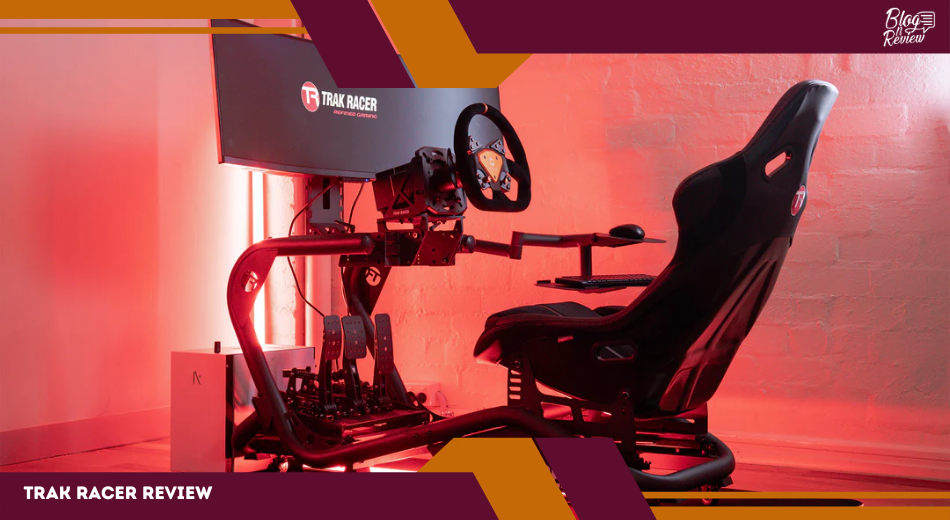
A direct-drive wheelbase can expose every weakness in a budget racing stand. The wheel deck twists, the pedals lift under hard braking, the seat moves and much of the force feedback disappears into the frame instead of reaching the driver. That is the point at which many sim racers start looking at Trak Racer. The company offers everything from compact steel cockpits to heavy aluminum-profile frames, monitor stands, seats, shifter mounts, flight-simulation accessories and motion-ready platforms. Its products are designed to become permanent parts of a dedicated gaming space rather than equipment that gets folded away after every session. The attraction is easy to understand. A well-configured Trak Racer cockpit can support powerful wheelbases, stiff load-cell pedals, multiple monitors and a long list of accessories. More importantly, its modular rigs can evolve as the owner upgrades equipment.
The purchase is less straightforward than choosing a wheel or pedal set, however. Trak Racer lists numerous frames, wheel-mount choices, pedal configurations, seats and optional accessories. The advertised frame price can also be significantly lower than the cost of a usable finished setup. Customer feedback introduces another consideration. Owners frequently praise the rigidity and appearance of the products, but reported experiences with dispatch times, missing components and support responsiveness are mixed. This Trak Racer review looks beyond the impressive showroom setups. We will compare the TR8 Pro, TR120 and TR160, explain what assembly is really like, examine pricing and help determine which cockpit—if any—belongs in your racing room.
Check Today's Price
What Is Trak Racer?
Trak Racer is an Australian-founded simulation equipment brand that has been producing racing cockpits since 2008. Its range now covers sim racing, flight simulation, monitor mounting, motion systems and complete ready-to-race packages. The company has established partnerships in professional motorsport and aviation. It identifies itself as an official simulator supplier to the Alpine Formula One team and Airbus Aircraft. These relationships add credibility, although ordinary buyers should still assess individual products on their specifications, price and support experience. Trak Racer’s primary purpose is to provide a rigid, adjustable foundation for simulation hardware. A cockpit holds the seat, wheelbase, pedals, shifter and sometimes the monitors in fixed positions relative to one another.
That stability becomes increasingly important as equipment gets stronger. Entry-level belt-driven wheels generate modest forces, but modern direct-drive systems can deliver considerable torque. Likewise, performance-oriented brake pedals may require substantial pressure. A flexible stand can undermine both realism and consistency. Trak Racer serves several audiences. Casual racers can choose compact frames, while enthusiasts can build around the TR8 Pro or an aluminum-profile cockpit. Advanced users can add triple displays, tactile transducers, flight controls and motion actuators. The brand’s greatest benefit is not one specific frame. It is the breadth of the ecosystem. Customers can start with a cockpit and later add mounts, shelves, casters, monitor stands and other components without rebuilding the entire setup.
Key Features of Trak Racer Sim Rigs
High-rigidity frame construction
Trak Racer uses two main construction styles. The TR8 Pro is built around a two-inch steel-tube chassis. Its curved design looks cleaner and more purposeful than a typical rectangular profile rig. Trak Racer says the strengthened wheel mount supports direct-drive systems up to 30Nm and that the reinforced pedal plate is designed to withstand up to 180kg of braking force.
The TR120 and TR160 use anodized T-slot aluminum extrusion. This industrial-looking material is popular in high-end sim racing because it combines strength with almost unlimited mounting flexibility. The TR120 is based around 120 × 40mm profile, while the TR160 steps up to 160 × 40mm base rails. Bigger does not automatically mean better for every buyer. The TR160 is heavier, more expensive and occupies similar practical floor space, but it provides additional confidence for extremely powerful hardware and motion systems.
Extensive wheelbase compatibility
A premium cockpit should not lock its owner into one wheel ecosystem. Trak Racer supports equipment from brands including Fanatec, Logitech, MOZA, Simagic, Simucube, Thrustmaster, Asetek and VRS. Compatibility depends on the selected wheel mount. Some wheelbases attach to a conventional top-mounted deck, while others benefit from a front or side mount. Choosing the appropriate configuration improves rigidity and can provide better knee clearance. This choice should be made before checkout. A cockpit advertised at an attractive base price may require a different wheel mount or adapter for a particular direct-drive base. The modular TR One mounting system used with the profile cockpits is especially useful for upgraders. Rather than replacing the entire wheel support, owners can change the relevant mounting plate when switching hardware.
Adjustable pedal mounting
Pedal positioning has a major effect on both comfort and braking consistency. Trak Racer’s rigs allow adjustment of the pedal distance and angle, although the mechanism varies by model. The TR8 Pro uses a reinforced adjustable plate. Its design is relatively straightforward and suits drivers who want to make quick positional changes without rebuilding profile sections. The TR120 and TR160 provide several pedal-mount choices, including pre-drilled plates, profile-based mounts and more adaptable hybrid configurations. The more advanced options can support GT-style, Formula-style or inverted pedal positioning. This flexibility benefits households where more than one person uses the cockpit. It also helps owners who change from conventional pedals to a stiffer load-cell or hydraulic set.
Seat adjustment and compatibility
The TR8 Pro includes seat sliders and oversized side brackets suitable for many bucket seats. The TR120 and TR160 listings also include slider hardware in the configurations examined for this review. A slider makes daily adjustment much quicker, but the seat itself may not be included in the advertised frame price. This is one of the most important details to check before placing an order. Trak Racer sells several seats, or buyers can use a compatible third-party bucket or reclining seat with the correct brackets. Comfort is subjective, so purchasing the frame without a seat can actually be an advantage for users who already know their preferred shape and width. A tightly fitted motorsport-style seat can feel immersive but uncomfortable during long sessions. Larger users and endurance racers may prefer a reclining seat with more padding.
Large accessory ecosystem
The profile rigs can accommodate more than 30 optional accessories. Available additions include integrated or freestanding monitor stands, keyboard trays, PC shelves, speaker mounts, shifter supports, handbrake plates, caster wheels, stabilizing feet and tactile transducer mounts. This ecosystem gives Trak Racer strong long-term appeal. A simple single-screen cockpit can eventually become a triple-screen, haptic or motion-enabled setup. The disadvantage is cost creep. Accessories that appear inexpensive individually can add hundreds of dollars to a complete configuration. Buyers should create a full parts list before comparing Trak Racer with a competitor’s bundle.
Single, triple and quad-monitor support
Trak Racer offers cockpit-mounted and freestanding display stands for one, two, three or four monitors. An integrated stand saves floor space and keeps the screens aligned with the cockpit. It can work well with a rigid profile frame and moderate-size displays. A freestanding stand isolates the monitors from vibrations generated by the wheelbase, bass shakers or motion equipment. It also allows the cockpit to be moved or adjusted without disturbing screen alignment. For very large triple displays or a future motion system, a freestanding monitor stand is usually the safer choice.
Motion and flight-simulation expansion
The TR120 and TR160 are promoted as motion-ready. Their strong profile structures provide suitable mounting foundations for compatible actuator systems. Motion capability is valuable even if it is not part of the initial purchase. A buyer can invest in a sufficiently rigid frame now and avoid replacing it when adding actuators later. Trak Racer also provides flight-control mounts. This allows one cockpit to serve racing and aviation simulation, although frequent switching between controls can make the setup more complicated.
Trak Racer TR8 Pro Review
The TR8 Pro V2 is the most visually distinctive model in this comparison. Instead of exposed rectangular aluminum profiles, it uses curved steel tubing and shaped mounting components. The result looks more like a purpose-built racing cockpit and less like industrial framing. It can therefore be the better option for a living room, office or gaming space where appearance matters. Trak Racer lists the TR8 Pro V2 frame at $699 in the United States at the time of this review. The package includes the steel chassis, adjustable pedal mount, seat sliders, left- or right-side shifter mounting and adjustable wheel support. A seat and monitor stand may increase the final price.
Trak Racer describes assembly as approximately 45 minutes, although first-time builders should allow longer. Attaching a seat, aligning sliders, installing controls and managing cables can turn the project into a multi-hour setup. Once assembled, the TR8 Pro’s strongest qualities are its rigidity, relatively compact footprint and accessible adjustment. The wheel-mount slider provides 130mm of forward-and-back travel, making position changes easier than on many basic cockpits. The primary compromise is modularity. The TR8 Pro supports a good selection of official accessories, but T-slot profile allows more freedom when attaching unusual third-party equipment. Best for: Buyers who want a strong, attractive cockpit without the exposed industrial appearance of an extrusion rig.
Trak Racer TR120 Review
The TR120S V2 occupies the sweet spot in Trak Racer’s aluminum-profile range. Its 120 × 40mm base structure is more than substantial enough for the direct-drive wheelbases and load-cell pedals used in most enthusiast setups. Heavy-duty brackets reinforce the wheel uprights, while the T-slot construction allows extensive adjustment. The official US listing showed a frame price of $570 when checked, although the product page also displayed an upcoming-stock notice for late October 2026. That is an important reminder to check actual stock status rather than assuming an “add to cart” button means immediate dispatch. The TR120’s main advantage over the TR8 Pro is customization. Wheel, pedal, seat and accessory positioning can be fine-tuned along the profile channels. It is also better suited to owners who enjoy modifying their equipment over time.
Assembly is more involved. The frame arrives as multiple lengths of profile, brackets, fasteners and mounting components. Achieving a square structure requires patience and repeated measurements. The TR120 is the model we would recommend to the greatest number of serious sim racers. It delivers most of the functional rigidity of the larger TR160 without the same weight or expense. Best for: Enthusiasts seeking a long-term direct-drive cockpit with broad upgrade potential.
Trak Racer TR160 Review
The TR160 is the heavy-duty option. Its 160 × 40mm base rails, large brackets and reinforced uprights are designed for demanding equipment, motion systems and users who simply want maximum structural confidence. The current TR160 V5 listing described a 580mm-wide, 1,400mm-long anodized aluminum chassis. It supports multiple pedal-mount choices, the TR One wheel system, more than 30 accessories and full-frame motion expansion. Pricing varies by configuration. Trak Racer’s US cockpit collection showed the TR160 V5 with a seat-slider kit starting at $879, while the individual product page examined during our research displayed another frame configuration at $730. These differences illustrate why buyers need to compare included mounts and hardware, not just model names.
The TR160 is the safest choice for very high-torque direct-drive bases, exceptionally stiff pedals and ambitious motion plans. For typical midrange equipment, however, it can be unnecessary overengineering. It is also extremely heavy once the seat, controls and monitors are installed. Caster wheels or a permanent location should be planned before assembly. Best for: Advanced users building a no-compromise cockpit around powerful hardware, multiple accessories or motion.
First Impressions and Assembly Experience
Trak Racer products tend to arrive in several large, heavy boxes. The aluminum rails and steel components generally create a premium first impression, but the volume of hardware can be intimidating. Do not discard packaging or flatten boxes until every component has been identified. Customer feedback includes reports of missing fasteners, damaged packages and mismatched parts. Photographing the boxes and organizing the contents before assembly can make any support request easier. The TR8 Pro is the simpler build because much of its structure uses fixed steel components. Its design offers fewer opportunities to install a bracket slightly out of alignment. The TR120 and TR160 require more patience. Builders need to keep the chassis square while tightening the brackets and correctly position T-nuts before closing access to a profile channel.
Instructions are a recurring weak point in customer feedback. Some owners find the manuals sufficient, while others rely on assembly videos to clarify orientation and sequencing. Set aside at least half a day for a profile rig, preferably with a second person available. It is easier to align large sections and mount a seat without scratching the frame when two people share the weight. The final result usually feels significantly more impressive than the assembly process. A properly tightened Trak Racer rig has the density and stability expected from serious simulation hardware.
Performance and Real-World Experience
Rigidity under direct-drive force feedback
Rigidity is where Trak Racer performs best. The TR8 Pro’s reinforced wheel structure is rated by the company for wheelbases up to 30Nm. The TR120 and TR160 use large profile rails and heavily supported uprights that should handle mainstream direct-drive systems without meaningful movement when assembled correctly. This stability makes force-feedback detail easier to interpret. Instead of the frame oscillating under load, more of the wheelbase’s output reaches the driver’s hands. The difference is not simply about maximum torque. Smaller effects such as tire loading, road texture and loss of front-end grip can feel more consistent when the wheel mount remains stationary.
Pedal performance
A rigid pedal deck is equally important. Load-cell braking depends on pressure rather than pedal travel, encouraging the driver to push hard against the brake. Weak cockpits can lift, bend or slide during these inputs. Trak Racer’s reinforced decks provide a much more stable platform. The TR160 offers the most headroom, but the TR120 is sufficient for the majority of enthusiast pedals. The TR8 Pro’s steel-supported plate also performs well, provided the fasteners are fully tightened.
Ergonomics
Trak Racer supplies enough adjustment to create a convincing GT-style driving position. Profile rigs provide the most control, allowing the wheel height, wheel distance, pedal location and seat position to be tuned independently. Finding the correct position takes experimentation. The elbows should remain slightly bent, the shoulders should rest naturally against the seat and the knees should not lock when the brake pedal is fully depressed. Poor ergonomics can cause discomfort regardless of how expensive the frame is. Spend time adjusting the setup before adding cable ties or permanently mounting accessories.
Noise and vibration
A heavy cockpit can reduce rattling compared with lightweight stands, but loose profile hardware may introduce its own noises. Recheck bolts after the first several sessions because parts can settle under repeated force feedback. Bass shakers work particularly well with these frames. The solid structure transfers tactile effects through the seat and pedals, although isolation feet may be needed to prevent vibration from reaching the floor. Long-term flexibility The aluminum-profile models have the strongest long-term value. Standard channels allow owners to reposition mounts or create custom solutions when official accessories do not meet a specific need. The TR8 Pro is still expandable, but it relies more heavily on purpose-built Trak Racer accessories. Buyers who frequently experiment with unusual peripherals should favor the TR120 or TR160.
Pricing and Value Analysis
Trak Racer occupies the mid-to-premium segment of the sim racing market. Current US frame prices observed during this review included approximately:
| Trak Racer model | Observed starting price | What to remember |
| TR8 Pro V2 | $699 | Steel frame with seat brackets and sliders; seat and display mounting can cost extra |
| TR120S V2 | $570 | Strong value, but verify stock timing and selected mounting hardware |
| TR160 V5 | $730–$879 | Price varies with frame configuration and included components |
Prices and availability can change by country, stock level and configuration. Shipping is calculated separately. Trak Racer’s policy advises allowing approximately five to ten business days for delivery of available products, while backordered-item estimates are explicitly described as guidance rather than guaranteed dates. A finished setup usually costs considerably more than the frame. Depending on what is already owned, a buyer may still need:
- A compatible seat
- Seat brackets or sliders
- The correct wheel mount
- A monitor stand
- Shifter and handbrake plates
- Keyboard, PC or speaker mounts
- Shipping
The premium is justified for users with direct-drive equipment who race regularly. A solid cockpit improves every session and can remain useful through several generations of wheels and pedals. Casual players using an entry-level wheel may get better value from a compact cockpit or wheel stand. Spending more on the frame than the entire control system is difficult to justify unless significant upgrades are planned.
Explore BRAND Collections
Trak Racer Pros and Cons
| Pros | Cons |
| Excellent rigidity for direct-drive wheels and stiff pedals | Profile models require substantial assembly time |
| Wide compatibility with major wheel and pedal brands | Seat and key accessories may cost extra |
| TR120 provides a strong balance of price and performance | Instructions can be unclear in places |
| TR160 is suitable for demanding and motion-ready setups | Large frames become difficult to move |
| TR8 Pro offers a cleaner tubular appearance | TR8 Pro is less universally modular than T-slot profile |
| Extensive range of monitor and peripheral mounts | Numerous optional parts can push the final price up quickly |
| Frames can support years of hardware upgrades | Stock and delivery communication receive mixed feedback |
| Replacement parts and add-ons are widely available | Return window is restrictive once assembly begins |
Who Should Buy a Trak Racer Cockpit?
Trak Racer is best suited to committed sim racers who want a permanent setup. If you own or plan to purchase a direct-drive wheelbase, load-cell pedals or multiple monitors, the frame provides the stability needed to use that equipment properly. The TR120 is the best general recommendation because it combines strong profile construction with reasonable pricing and excellent customization. The TR8 Pro is preferable when appearance, quicker assembly and a smaller visual footprint matter more than unrestricted profile modularity. The TR160 is for users who know they need extreme rigidity. Motion builders, commercial environments and owners of very powerful controls are more likely to benefit from its additional mass.
| Buyer profile | Recommended model |
| First serious direct-drive setup | TR120S V2 |
| Wants a sleek tubular cockpit | TR8 Pro V2 |
| Planning motion or maximum-torque hardware | TR160 V5 |
| Frequently changes components | TR120 or TR160 |
| Limited gaming-room space | TR8 Pro or a smaller Trak Racer model |
| Entry-level wheel and occasional use | Consider a cheaper cockpit first |
Who Should Avoid Trak Racer?
Trak Racer is not ideal for anyone who needs to fold the cockpit away after each session. Even the more compact models are intended to remain assembled. Buyers who dislike furniture-style assembly may also find the profile rigs frustrating. The process involves many brackets, T-nuts and alignment decisions. It is worth looking elsewhere if responsive after-sales support is the highest priority. Some customers report excellent resolutions, but enough negative feedback concerns delayed responses and order problems to justify caution. Finally, buyers who are uncertain about their available floor space should not order until they have measured the complete setup, including the seat, monitors and clearance required to enter the cockpit.
Customer Feedback Summary
Trak Racer’s customer feedback reveals a noticeable divide between product satisfaction and service satisfaction. When checked for this article, the company had a 3.6 out of 5 Trustpilot score from 3,569 reviews. Sixty-two percent of the ratings were five stars, while 17% were one star. Trustpilot also reported that Trak Racer replied to 88% of negative reviews, although the typical response time was listed as more than one month.
Positive themes include:
- Heavy, rigid and durable frame construction
- Strong direct-drive and pedal performance
- Extensive adjustability
- Well-packaged orders that arrive complete
- Individual support representatives who take ownership of problems
Negative themes include:
- Delayed or partially shipped orders
- Items shown as available but later treated as backorders
- Missing, damaged or mismatched components
- Unclear assembly instructions
- Slow communication when delivery problems occur
These reviews do not mean every order will encounter trouble. Many customers receive complete rigs quickly and report straightforward assembly. They do suggest that buyers should verify stock, save order documentation and inspect all packages before beginning construction.
Trak Racer vs Major Competitors
| Brand | Strongest quality | Main drawback | Best for |
| Trak Racer | Broad lineup and accessory ecosystem | Mixed logistics and support feedback | Buyers wanting many frame choices |
| Sim-Lab | Refined profile designs and strong reputation | Availability and shipping cost vary by region | Premium profile-rig buyers |
| Next Level Racing | Accessible retail distribution and packaged solutions | Some models offer less open-ended customization | Buyers wanting a straightforward bundle |
| GT Omega | Competitive pricing | Accessory depth depends on the chosen model | Value-focused enthusiasts |
| Playseat | Recognizable designs and accessible compact cockpits | Many models are less rigid than heavy profile rigs | Casual and space-conscious racers |
Trak Racer vs Sim-Lab
Sim-Lab is one of Trak Racer’s closest competitors in aluminum-profile cockpits. Both support high-torque wheelbases and extensive adjustment. Sim-Lab often appeals to buyers who prioritize carefully refined mounting components and consistently documented builds. Trak Racer provides a wider-feeling ecosystem across racing, flight, displays and motion. Regional shipping cost and product availability may decide the comparison. When similarly configured, focus on the included wheel mount, pedal deck and seat hardware rather than the base frame price.
Trak Racer vs Next Level Racing
Next Level Racing offers everything from foldable seats to premium Elite-series profile cockpits. Its products are often easier to find through large retailers, which can simplify returns and delivery. Trak Racer provides more granular configuration choices. Next Level Racing can be better for buyers wanting a predefined package, while Trak Racer suits those who enjoy selecting and modifying individual components.
Trak Racer vs GT Omega
GT Omega is frequently competitive on price and offers popular profile cockpits such as the Prime range. Trak Racer generally has the broader accessory catalog and more model choices. GT Omega may deliver better value when a suitable bundle includes the mounts a buyer already needs.
Frequently Asked Questions
Is Trak Racer a legitimate company?
Yes. Trak Racer is an established simulation-equipment company operating since 2008. It sells through regional storefronts and has partnerships connected with Alpine F1 and Airbus. Customer support experiences are mixed, but the brand itself is legitimate.
Are Trak Racer cockpits worth it?
They are worth considering for regular sim racers using direct-drive wheels, load-cell pedals or multi-monitor setups. Occasional racers with entry-level controls may not benefit enough to justify the cost and floor space.
Which Trak Racer cockpit is best?
The TR120 is the best overall choice for most enthusiasts. The TR8 Pro suits buyers wanting a cleaner tubular design, while the TR160 is better for maximum-torque equipment and motion systems.
Is the Trak Racer TR8 Pro rigid?
Trak Racer says its strengthened wheel structure supports up to 30Nm of direct-drive torque and its pedal mount withstands up to 180kg of braking force. Correct assembly and bolt tension remain important.
What is the difference between the TR120 and TR160?
The TR120 uses 120 × 40mm base profile, while the TR160 uses larger 160 × 40mm rails. The TR160 is heavier and offers more structural headroom, but the TR120 is sufficiently rigid for most consumer sim racing equipment.
Does a Trak Racer cockpit include a seat?
Not always. Some bundles include a seat, while many frame listings require the buyer to select or supply one. Review the “what’s included” section for the exact configuration.
Are Trak Racer rigs compatible with Fanatec and MOZA?
Trak Racer supports a wide range of Fanatec and MOZA wheelbases and pedals. Some products require a particular deck, front mount or adapter, so compatibility should be checked before ordering.
How long does a Trak Racer cockpit take to assemble?
The TR8 Pro is promoted as a relatively quick build, but a complete setup may still take several hours. Aluminum-profile rigs such as the TR120 and TR160 can take half a day or longer for a first-time builder.
Can Trak Racer cockpits support triple monitors?
Yes. Trak Racer sells integrated and freestanding triple-monitor stands. Freestanding stands are generally preferable for large displays, strong tactile feedback or motion systems.
Is the TR160 overkill?
It can be. The TR160 makes sense for extremely powerful wheelbases, stiff pedals, extensive accessories and future motion. The TR120 offers better value for many home users.
What is Trak Racer’s return policy?
The US policy allows returns within 14 days of dispatch, provided the products meet its conditions. Items should generally remain unused and uninstalled. Shipping charges are normally excluded, and used products may be subject to a restocking fee.
Should I order directly from Trak Racer?
Direct ordering provides access to the widest configuration range. Before purchasing, confirm stock status, save screenshots of estimated availability and inspect every package before beginning assembly.
Final Verdict
Trak Racer earns its reputation where it matters most on track: its cockpits are rigid, adjustable and capable of supporting serious simulation hardware. The TR8 Pro combines strong performance with a polished tubular design. The TR120 is the standout value for most enthusiasts, delivering excellent rigidity without automatically moving into maximum-overkill territory. The TR160 is a true endgame frame for motion systems and high-force equipment. The major reservation is not the engineering. It is the variability of the buying experience. Delivery delays, unclear stock information and slow support appear often enough in customer feedback that they cannot be dismissed as isolated complaints.
Buyers should confirm availability, select every mounting component carefully and inspect the shipment before starting the build. Those precautions make it more likely that the final experience will reflect what Trak Racer does best: producing excellent sim racing hardware.
Best for: Dedicated enthusiasts building a permanent, upgradeable cockpit.
Who should skip it: Casual racers, users needing a foldable setup and buyers unwilling to manage a detailed assembly process.
Overall value: Very good when the correct configuration arrives complete.
Shop BRAND Now
Leave a Reply
Your email address will not be published. Required fields are marked
Can I write you?
Sign up to get my weekly newsletter.